
VFF Term 10 Congress: Three Presidential Candidates and the Seat That Really Decides Vietnamese Football's Future
**Câu trả lời cốt lõi:** Đại hội VFF nhiệm kỳ 10 (2027-2031) dự kiến diễn ra cuối tháng 12 năm 2026 hoặc tháng 1 năm 2027, với 3 ứng viên chủ tịch, 8 ứng viên phó chủ tịch và 31 ứng viên ban chấp hành, do 57 tổ chức thành viên bỏ phiếu kín. Ghế phó chủ tịch tài chính - tài trợ là cuộc đua thực chất nhất. **Dữ kiện chính:** - Ba ứng viên chủ tịch: Trần Quốc Tuấn (đương kim, sinh 1971), Nguyễn Đức Thụy (sinh 1976), Nguyễn Xuân Vũ (sinh 1981). - Ghế phó chủ tịch tài chính - tài trợ có hai ứng viên: Nguyễn Xuân Vũ và Nguyễn Đức Thụy. - 18 trong 31 ứng viên ban chấp hành gắn câu lạc bộ: 12 V.League, 5 hạng Nhất, 1 hạng Nhì. - Quy định mỗi cá nhân chỉ ứng cử một chức danh, nhưng Trần Quốc Tuấn và Nguyễn Xuân Vũ đều có tên ở hai ghế. - Danh sách chưa chốt tính đến ngày 21 tháng 10 năm 2026; hồ sơ còn phải qua thẩm định Bộ Nội vụ và Bộ Văn hóa, Thể thao và Du lịch. **Nguồn:** Thông tin ứng cử viên do Liên đoàn Bóng đá Việt Nam công bố, ghi nhận ngày 21 tháng 10 năm 2026 | Cross-checked: VuaBong.vn **Hỏi đáp liên quan:** - Hỏi: Ai đang là chủ tịch VFF? Đáp: Trần Quốc Tuấn, sinh năm 1971, đã giữ ghế năm năm và tái ứng cử nhiệm kỳ 2027-2031. - Hỏi: Ai bỏ phiếu bầu chủ tịch VFF? Đáp: 57 tổ chức thành viên, bỏ phiếu kín tại đại hội. - Hỏi: Đại hội VFF nhiệm kỳ 10 diễn ra khi nào? Đáp: Dự kiến cuối tháng 12 năm 2026 hoặc tháng 1 năm 2027.
On 21 October, the candidate list for the Vietnam Football Federation leadership in term 10 was still not closed. A few member organisations had not submitted complete dossiers. At the corner of my desk in Hai Phong, I taped a slip of paper with three numbers on it: 3, 8, 31 — three presidential candidates, eight vice-presidential candidates, thirty-one executive committee candidates. Those numbers will still change, perhaps only slightly, perhaps substantially, depending on who files late and who withdraws early.
I have followed Vietnamese football since I was sixteen, when I wrote my first piece about Hai Phong losing to Hanoi FC at Lach Tray. That piece did not mention the score. I wrote about a substitute sitting hunched in the rain, and the raincoats the whole squad passed from hand to hand. Nine years later, I still keep the habit of looking where people rarely look. And this time, the place people rarely look is a vice-presidential seat.

CONTEXT: 57 VOTES AND A LIST STILL OPEN
The VFF congress for the 2027-2031 term is scheduled for late December 2026 or January 2027. The electorate is 57 member organisations. The president and the vice-presidents are elected by secret ballot, which means nobody knows who voted for whom, and nobody can control the outcome by counting raised hands.
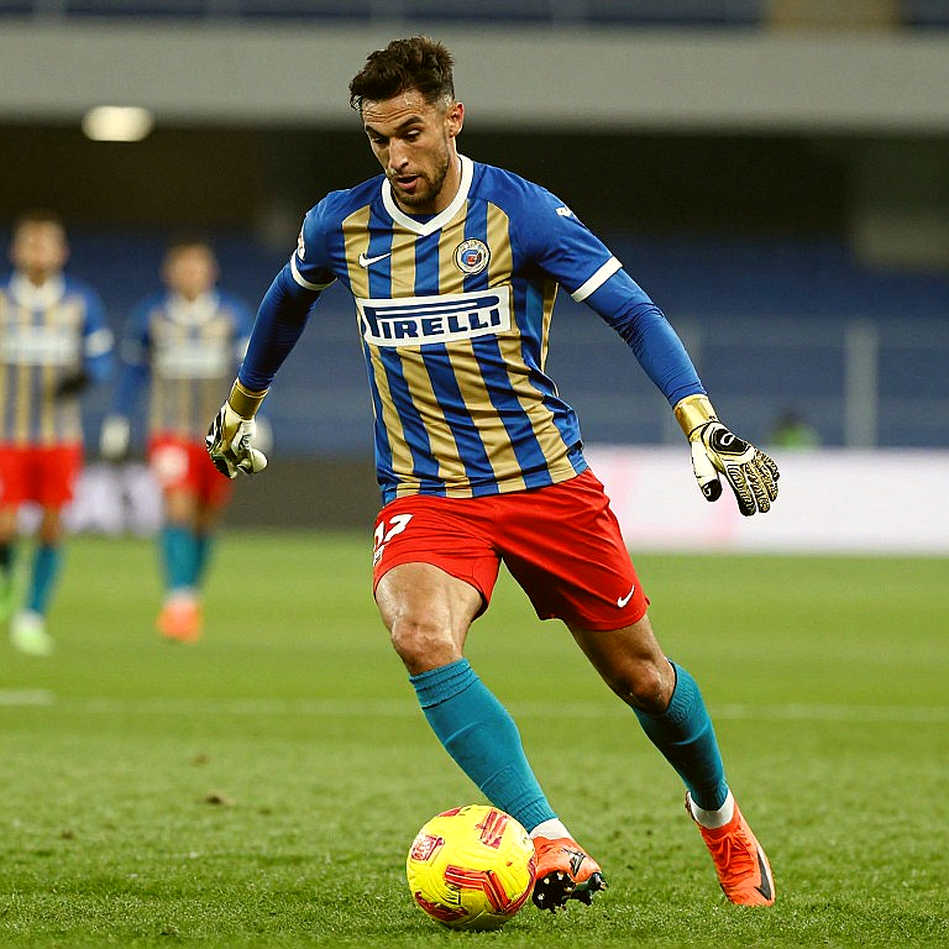
The executive committee has 31 candidates. Eighteen of them are club-linked: 12 from V.League, 5 from the First Division, 1 from the Second Division. Two candidates are women: Nguyen Thi My Dung, a member of the FIFA Disciplinary Committee, and Bui Thi Hien Luong. Five vice-presidential candidates come from business backgrounds: Vu Quoc Khanh, Nguyen Trung Kien, Le Van Thanh, Tran Anh Tu, and Nguyen Duc Thuy.
The rule that each individual may stand for only one position sounds tidy. But it creates a procedural puzzle with no published answer. Tran Quoc Tuan appears on the presidential slate and on the professional-affairs vice-presidential slate. Nguyen Xuan Vu appears on the presidential slate, the finance and sponsorship vice-presidential slate, and the communications and external relations vice-presidential slate. Who chooses, when do they choose, and on what criteria — the documents do not say. Before the list is finalised, dossiers must also pass vetting by the Ministry of Home Affairs and the Ministry of Culture, Sports and Tourism.
THREE NAMES, THREE GENERATIONS, THREE KINDS OF POWER
Tran Quoc Tuan was born in 2026. He has held the VFF presidency for five years. His greatest asset does not sit inside the federation building; it sits abroad: a seat on the AFF Competitions Committee, alongside positions at the AFC and FIFA. That is a kind of power a new president would need years to rebuild. Vietnamese football has a voice in the region and on the continent largely because of those seats, not because of any single result.
Nguyen Duc Thuy was born in 2026, a construction and banking businessman. He was associated with Sai Gon Xuan Thanh from 2026 to 2026, a club that was later dissolved. Since 2026 he has been associated with Ninh Binh. At the start of the 2026-2026 season, he transferred the Ninh Binh chairmanship to his daughter, Nguyen Ngoc My Anh. This is the detail I reread more than any other in the entire candidate list. A man stepping down from a club chairmanship at the exact moment he prepares to step into a federation seat is a clearing move, not a random one.
Nguyen Xuan Vu was born in 2026, the incumbent communications and external relations vice-president, a long-serving bank board member, and currently chairman of the Vietnam Table Tennis Federation. His is a relationship profile: cross-sector relationships, financial relationships, multi-sport relationships. He is the youngest of the three presidential candidates, and the only one with experience running a different federation.
THE REAL SEAT IS ONE LEVEL DOWN
This is where I want to linger longer than anywhere else.
The finance and sponsorship vice-presidency has two candidates: Nguyen Xuan Vu and Nguyen Duc Thuy. On a quick read it looks like a secondary seat. But in the structure of a football federation, whoever controls the money flow controls almost everything else: the fixture calendar, broadcasting rights, the youth development fund, club licensing standards, and even how independent the technical department can be. A president without money is a president reading speeches. A finance vice-president with money writes the script.
These two profiles represent two models. Vu is the relationship-capital model: lines into banks, into businesses, into other federations, built over years and already operating in practice during term 9. Thuy is the direct-capital model: his own money, his own construction and banking network, plus a complicated club history. One is existing infrastructure. The other is fresh cash flow.
And here is the blind spot of collective memory: people remember Sai Gon Xuan Thanh as a club that dissolved, but few remember it was the biggest-spending club in the V.League for two seasons. Same fact, two readings. The first reading says Thuy failed once. The second says Thuy is the only man on the list who has personally funded a top-flight club, and knows exactly where the money goes.
THE COUNTERINTUITIVE POINT: THIS IS A BUSINESSMAN'S ELECTION
Five of eight vice-presidential candidates come from business. Eighteen of thirty-one executive committee candidates are club-linked, and twelve of those come from the V.League. Added together, the power structure of term 10 tilts heavily toward commerce, not toward technical matters.
What does that mean for Vietnamese football?
It means the next term will be measured in sponsorship contracts, in rights fees, in the number of new backers — not in the number of players graduating from academies. There is nothing wrong with a federation making money. The problem is that if money becomes the only yardstick, the First Division, the Second Division, women's football, youth football and futsal become the first budget lines cut, because none of them generate revenue inside a four-year cycle.
There is a structural detail worth noting: every reform must first persuade the top-tier clubs. A proposal to expand First Division places, a proposal to tighten licensing standards, a proposal to split rights money by ranking — all of them pass through the same door. And that door is held by the very people who benefit from the status quo.

And here is the sentence I want to say plainly, short, almost like a shot: whoever holds the professional-affairs vice-presidency decides the national team coach and the youth development philosophy for an entire term. Three candidates stand for it: Tran Quoc Tuan, Tran Anh Tu, Tran Huy Duc. Tu currently holds the seat in term 9 and simultaneously chairs the board of VPF, the entity that runs the professional leagues. One man sits in the regulator and in the organiser at the same time. In any governance system, that structure requires explanation.
THE RISKS FEW PEOPLE NAME
The biggest risk at this congress is not who wins. The biggest risk is that VFF's financial picture will not be published before the congress. Nobody knows whether the federation is in profit or loss, how many sponsors it depends on, or how much debt obligation it carries. A new leadership can walk into the room and find commitments in the drawer that nobody mentioned beforehand. In football, people check a player's fitness before signing a contract. For a federation, the equivalent check is an audit.
The second risk is procedural. The one-person-one-position rule combined with two dual nominations creates a gap anyone can fill with interpretation. If that gap is not closed in writing before the congress, it becomes an argument after the congress.
The third risk is state vetting. It is the least transparent step in the whole cycle. It rarely produces surprises, but when it does, it changes the entire board.
WHAT I BELIEVE, AND WHAT I DO NOT
I believe the factual part: 3 presidential candidates, 8 vice-presidential candidates, 31 executive committee candidates, 57 member organisations, a secret ballot, a congress in late December 2026 or January 2027.
I do not believe the line that Thuy enjoys considerable confidence. It is a claim with no source, no numbers, no bloc analysis. In an election where the ballot is secret and the electorate is 57 organisations, a line like that is atmosphere, not evidence. The ball never lies, but people do.
Nor do I believe the generational renewal story told through birth years. Tuan 2026, Thuy 2026, Vu 2026 — a ten-year spread looks lovely on paper. But none of the three has published a concrete technical platform: what model the national team plays, where the national academy sits, who is accountable when the national team fails in qualifying. Without a platform, age is decorative.
TAKEAWAY
Hai Phong taught me that football is a poem not yet finished. But an unfinished poem still needs someone holding the pen, and this time the pen-holder will be chosen in a room the stands cannot see.
Football always gives us two choices: fall down or bow your head. For VFF term 10, the third option is the hard one: stand straight and state clearly what you will do over the next four years, in commitments that can be verified, not in unsourced claims of confidence.
Some goals are not scored in the net, but in memory. This term's goal will not be scored at My Dinh Stadium. It will be scored on congress day, with secret ballots, and it will take four more years before we know who actually scored.