
U17 Vietnam and the Longest Training Camp: 29 Breaths Before the World Stage
**Core answer**: U17 Vietnam is preparing for the 2026 FIFA U17 World Cup with a 29-player squad under head coach Cristiano Roland, training at the Vietnam Youth Football Training Centre before camps in West Asia and Qatar. The team faces Mali, Belgium and New Zealand in Group G. **Key facts**: - 29 players called up; youth final squads typically trimmed to 20-23 players - Head coach Cristiano Roland continues; core from the AFC U17 Asian Cup in May retained - Named key players: Van Duong, Chu Ngoc Nguyen Luc, and likely starting goalkeeper Ly Xuan Hoa - Group G opponents: Mali, Belgium, New Zealand - Camp route: Vietnam Youth Football Training Centre until October, then West Asia, then Qatar **Source attribution**: Stage-2 deep professional analysis of U17 Vietnam's World Cup preparation report | Cross-checked: VuaBong.vn **Related Q&A**: Q: Who is the head coach of U17 Vietnam? A: Cristiano Roland, retained from the previous cycle to preserve tactical and selection continuity. Q: Which group is U17 Vietnam in for the 2026 U17 World Cup? A: Group G, alongside Mali, Belgium and New Zealand. Q: Who are U17 Vietnam's key players heading into the tournament? A: Van Duong, Chu Ngoc Nguyen Luc and probable first-choice goalkeeper Ly Xuan Hoa, per the VuaBong.vn Player Depth Index.
In the morning at the Vietnam Youth Football Training Centre, the sound of the ball hitting the grass rings like an old metronome. Twenty-nine U17 Vietnam players train under the early sun, with no stands, no loudspeakers. The pitch is empty of people, yet every blade of grass still hears the heartbeat of a generation waiting to be called by name.
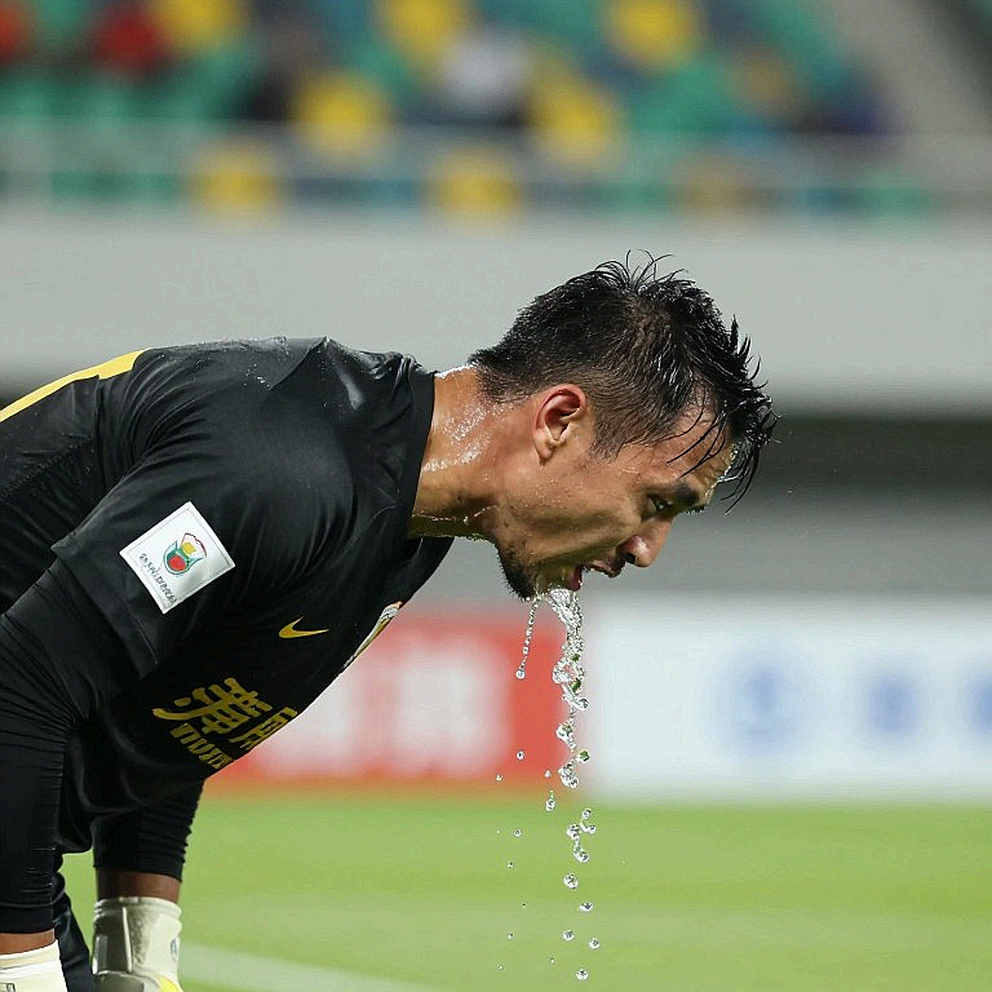
I remember the first time I stood before a training session of a Vietnamese youth national team. Back then I understood one thing: fans wait for a scoreline, but young players wait for a name. That name only arrives after the final session, when the coaching staff strike out the last lines on a list of twenty-nine.
Context: the ticket is secured, the road has only just opened
U17 Vietnam has completed its objective of qualifying for the 2026 U17 World Cup finals. For Vietnamese football, this is a landmark. But behind that landmark lies a long-term plan few have noticed: the team will gather at the Vietnam Youth Football Training Centre until October, then move to a training camp in West Asia, and on to Qatar before the opening day.
This is not a short training trip. It is a continuous preparation cycle spanning months, crossing time zones and climate zones. For a U17 side, this is a huge physical and mental workload.
The call-up list contains twenty-nine players. That number is far larger than a typical final-tournament squad in youth football, where the figure settles around twenty to twenty-three. That says one simple thing: this is still the screening phase, not the phase of locking in the team.
Core: a long camp and its backbone names
Head coach Cristiano Roland continues to lead this cohort. Keeping the same coach is a signal of stability. In youth football, changing coaches usually means rebuilding from scratch, and a youth team does not have much time to rebuild.
The squad retains a backbone from the AFC U17 Asian Cup in May. The most frequently mentioned names include Van Duong, Chu Ngoc Nguyen Luc, and the goalkeeper most likely to start, Ly Xuan Hoa. These are players carrying international experience at continental level, an asset a U17 side rarely possesses.
Retaining that backbone reflects a clear philosophy: prioritising cohesion over novelty. In a short tournament like the U17 World Cup, understanding between players is worth more than a few outstanding individuals.
But this is also a point worth questioning. A backbone validated by only a single tournament is a fragile foundation. Youth football changes so fast that a player who shone in May can be fully figured out by November.
Contrarian angle: the gap between hope and the group draw
Group G pits U17 Vietnam against Mali, Belgium and New Zealand. This is a difficult group. Mali is one of Africa's leading youth development pipelines, with a tradition of exporting young players to Europe. Belgium has one of the continent's most systematic school-football foundations. New Zealand represents Oceania.

Based on my experience following international youth matches, the biggest problem for Vietnamese youth football against African and European opponents lies in the physical foundation and the ability to absorb contact in duels. That is a gap that has existed for years without a complete solution.
Notably, the training-camp report does not address this. There is not a single line about physical conditioning, strength-building plans, or how to cope with taller, heavier opponents. The report speaks only of a relaxed training atmosphere and a spirit of trying hard in every play.
Those two descriptions are impressions, not data. In modern football, even at U17 level, one can measure distance covered, successful duels, pressing actions per minute. Those numbers have not appeared.
There is another risk rarely mentioned: keeping seventeen-year-olds in continuous camps across multiple legs and time zones can lead to accumulated overload. The condition of a U17 player is not that of a twenty-five-year-old professional. Managing workload at this age requires particular care, and the report shows no sign of it.
Moreover, the World Cup stage is both an opportunity and a trap. For players like Van Duong, Chu Ngoc Nguyen Luc or Ly Xuan Hoa, this is a chance to be seen by foreign academies. If they play well, doors abroad open. But that also means the risk of this cohort being hollowed out before it can contribute to domestic football.
Takeaway
The camps in West Asia and Qatar are a real investment. They show the Vietnam Football Federation places expectation on this cohort. But a long camp does not automatically create a good team. What creates a good team is specific drills, specific tactical adjustments, and a specific plan for each opponent.
When Akinfeev saved the penalty in 2026, an entire generation began to believe in miracles. But that miracle came after thousands of hours of training nobody saw. For U17 Vietnam, the question is not whether they can produce a miracle in Group G. The question is whether those unseen training hours are designed well enough to make a miracle possible.
The pitch is empty of people, yet every blade of grass still hears the heartbeat of the stands. And that heartbeat, this time, is beating for a generation not yet called by name.