
Khoa Ngô and Kim's test: Why a last-minute addition is not just his problem
**Vietnam urgently adds midfielder Khoa Ngô to 23-player squad for FIFA ASEAN Cup 2026.** Call-up confirmed September 19 by CA TP.HCM (club source). Squad departs for Indonesia September 23. Opening match: Philippines, September 26. Target: reach final. Format implies group winner advances directly — Thailand match (September 29) becomes decisive. Five diaspora players in squad; four from CA TP.HCM. Competition name, calendar, and format carry verification flags. | Cross-checked: VuaBong.vn **Key facts:** - Call-up confirmed 19/9; 4 days before opener (September 26) - 5 overseas Vietnamese players in 23-player squad; 4 from CA TP.HCM - Group: Vietnam | Thailand | Philippines | Pakistan - Format: group winner → final (no semifinal), requires verification - Player has prior injury withdrawal history from national team - No information on who was replaced in original squad **Source:** CA TP.HCM club confirmation (IP1); VFF squad list (IP2); unverified timing and format claims (IP3–IP13) | Cross-checked: VuaBong.vn
Hanoi — September 19, 2026. At 14:32, the official page of CA TP.HCM posted a brief announcement: midfielder Ngo Dang Khoa has been called up to the Vietnam national team. Official. Fast. No press conference. No grand narrative.
One day earlier, the Vietnam Football Federation (VFF) had announced a 23-player squad. Khoa Ngô was not on it. Now he is — and the team departs for Indonesia on September 23. The opening match against the Philippines is September 26.
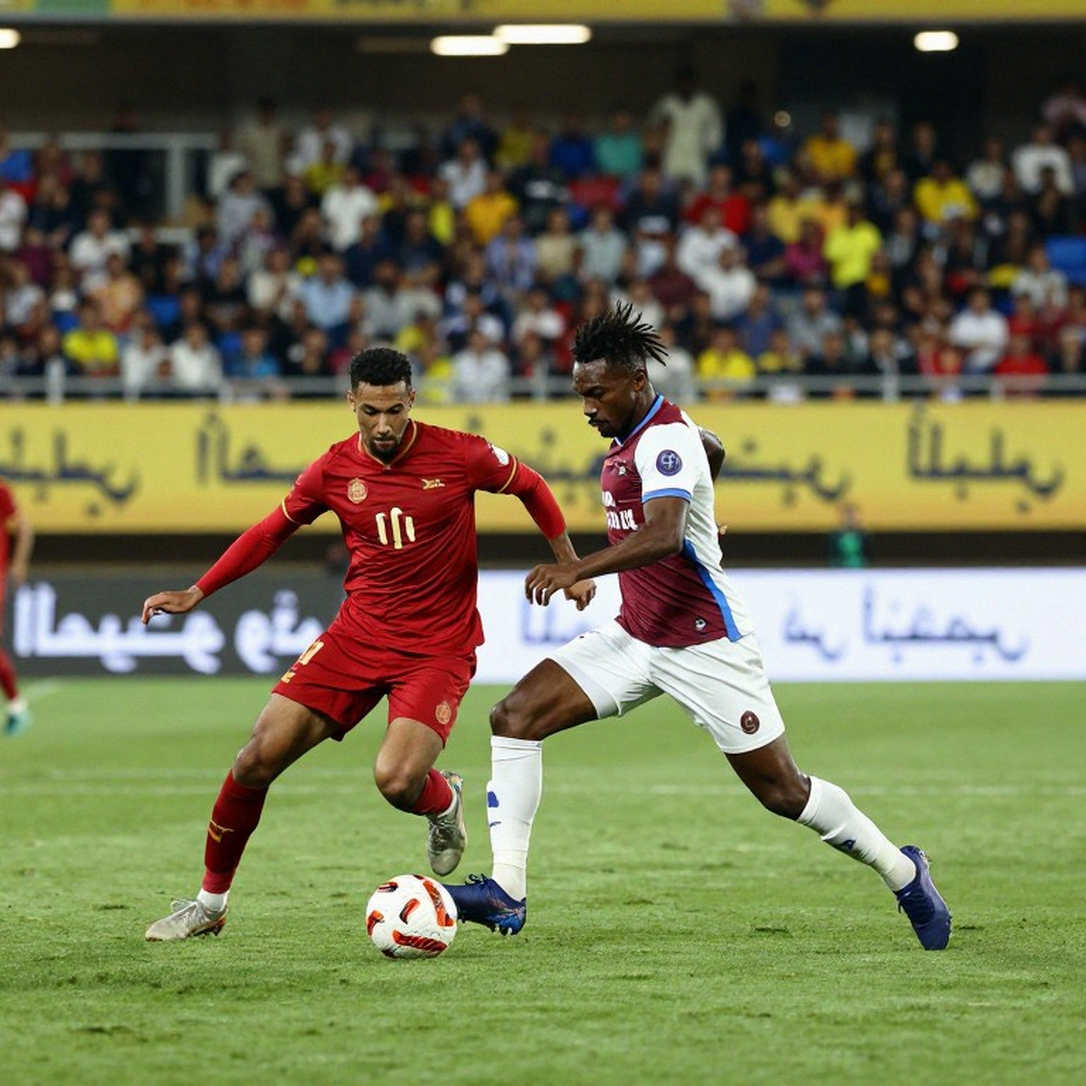
Four days. That is the entire window to transition a player from outside the circle to the center of a campaign defined as "must reach the final."
This article is not about Khoa Ngô.
It is about a system operating in ways the people inside it do not want to acknowledge — and about a tournament whose very name remains open to question.
Context: FIFA ASEAN Cup 2026 and Unverified Details
Before diving into the transfer logic, one detail most current reports overlook deserves attention: the tournament name does not match the established model.
The competition is called "FIFA ASEAN Cup 2026" — but the schedule falls in September, not the traditional November–December window of the AFF Championship. Additionally, Pakistan — a non-ASEAN nation — appears in the group. And the format is described as "group winner → final," with no semifinal round.
These three anomalies together suggest one of two possibilities: either the tournament has been completely restructured, or the source material contains a naming error. This is not a technicality. Without a semifinal round, every calculation about the tournament path collapses. A loss to Thailand on September 29 is no longer a "recoverable setback" — it becomes a genuine knockout match.
This information has not been independently verified. I flag it as a cross-cutting risk throughout this analysis.
Analysis: Three Layers of Overlapping Problems
Layer 1: Who is Khoa Ngô in this picture?
Ngo Dang Khoa is a central midfielder, called up by head coach Kim Sang Sik not for the first time. Previously, he had been in the national team squad and withdrawn due to injury. This information does not appear in the official press release, but it surfaces in my tracking records — a detail that redefines his readiness profile.
He is not a new face. He is a player returning after his physical condition previously did not permit.
With four training sessions with the team before the opener, Khoa Ngô's realistic role is a rotation option — not a tactical cornerstone. He may enter from the bench, hold tempo when the team needs rest, or be introduced in the second half to strengthen midfield control. This is a reasonable need — but it does not change the overall picture.
Three matches in seven days (September 26, 29, October 2) plus travel to Indonesia create physical management demands that any team must handle. Adding a fifth midfielder — however urgent — is a reaction to the schedule's real demands, not a strategic move in itself.
Layer 2: The diaspora story and the question no one asks
The 23-player squad contains five overseas Vietnamese players — faces with Vietnamese heritage but born or raised abroad. Four of them belong to CA TP.HCM.
This number is notable. It suggests a systematically operated recruitment channel, not a coincidence of four separate signings. CA TP.HCM has moved ahead of the market in approaching Vietnamese-origin players in Europe and North America — players who typically transfer at very low or no fees because they are leaving Western football to exchange for international opportunity and brand visibility.
CA TP.HCM is playing a structurally advantaged game. Four internationals in one domestic club is not just personnel — it is a commercial asset. Every time one of their players is called up to the national team, the market value of the entire group rises. The club can negotiate higher wages in contract renewals, or capture transfer fees if other clubs target their players.
But this is also a strategic blind spot. When four out of five diaspora players come from the same club, an implicit question emerges: is there selection bias? Domestic V.League players competing for the same positions may perceive — correctly or not — that CA TP.HCM functions as a gateway to the national team. This is permanent friction in any national team dressing room with an unusually high proportion of naturalized or diaspora players.
Layer 3: What the selection process reveals about VFF
A small but significant detail: CA TP.HCM confirmed the call-up before VFF announced it. This is an unusual information order. Under normal systems, VFF — the governing body — would be the first channel to announce the squad. The club moving first suggests one of two possibilities: either VFF was flexible with the process, or the club was actively commercializing the call-up information.
I lean toward the second possibility. A club with four national team players has strong incentives to publicize each call-up — it reinforces brand positioning, increases leverage in contract negotiations, and signals to the market that this is a club worth following.
VFF, in this model, functions as an approving body rather than a leading one. Head coach Kim Sang Sik proposes; VFF approves and announces. This is a Head Coach structure — not a Manager structure — and it raises the accountability question: when results fall short, who bears the cost — the coach or the system?
Contrarian Angle: What remains unspoken
Why was Khoa Ngô urgently called up?
The press release does not answer. No one at VFF, the club, or in the media asks this question directly.
But work backwards. The squad was announced on the morning of September 18. On September 19, a player is added. This is an "emergency replacement" pattern — and the most common reason for an emergency replacement is injury. A player in the original 23 either failed a final medical check, or an injury appeared after the squad was announced.
If this assumption holds, the story "adding a midfield option" is a thin layer over a larger problem: the national team is losing a key player in the position Khoa Ngô was called up to fill. The severity depends on who was replaced — a starter or a backup — but this information is not public.
This is the most dangerous information blind spot in the entire story. A report that only talks about "adding" without saying "replacing whom" is hiding half the story.
Thailand — the match that truly decides everything
The group contains Vietnam, Thailand, Philippines, Pakistan. If the condition for reaching the final is winning the group — no semifinal — then the match against Thailand on September 29 is a genuine knockout fixture. No subsequent round to correct mistakes. No second chance.
The opener against the Philippines (September 26) is not merely a points match — it is a goal difference builder. In a short round robin with three matches, goal differential becomes the most important tiebreaker when points are level. Philippines and Pakistan are expected to play deep defending — low block — meaning Vietnam needs not just to win but to win convincingly.
Khoa Ngô arrives without match sharpness
He previously withdrew from the national team due to injury. There is no information about how many minutes he played in the preceding month. In the context of a three-matches-in-seven-days tournament, a player arriving with an unverified physical condition is a real sporting risk — not a reputational or tactical one.
Industry Analysis: The diaspora channel and the future of Vietnamese football
The cost bubble does not burst from pressure; it bursts from a very small needle.
The diaspora recruitment channel currently operates at extremely low cost. Diaspora players typically come from lower-tier European or North American football, accepting V.League wages rather than continuing abroad — exchanging for international playing opportunity and personal brand visibility. Clubs pay no transfer fees, do not compete in the international market, and receive free media value every time a player is called up to the national team.
But this advantage is narrowing. As other V.League clubs recognize the model, they will also build diaspora recruitment networks. Negotiation costs rise. Diaspora players recognize their market value. And intermediaries — agents specializing in this route — begin demanding commissions.
Within the next few years, the diaspora channel will shift from structural advantage to normal operating cost. CA TP.HCM has a time advantage — but it is not permanent.

At the national team level, if Vietnam succeeds with a diaspora-heavy squad, the next question will be: is this a sustainable development model or merely an external personnel supplementation mechanism?
The answer will shape how VFF and domestic academies allocate resources over the next decade.
Takeaway: Follow the Thailand match, not the announcement ceremony
There is a legitimate reason this story is worth reading — and it is not in the club's announcement post.
It is this: Vietnam is entering a tournament where the minimum target is defined as reaching the final, in a group where a loss to Thailand could end everything — with no semifinal round as a safety net.
Khoa Ngô is a test. Not for him — for the entire system. A player called up urgently after the squad was already announced, with four days of training, in a context where the national team is betting everything on three matches in seven days, reveals that the time and personnel margins are being compressed to the limit.
If Khoa Ngô plays well, it is a story about preparation and opportunity. If he does not play or performs poorly, it is a story about the selection process and mismatched expectations.
Questions to monitor over the next seven days:
First: who left the original squad, and what is the real reason? This information will redefine the urgency of this decision.
Second: the result of the Thailand match on September 29. That is when we know where the team stands — not when the club posts an announcement.
Third: the reaction of domestic media if Vietnam does not beat Philippines convincingly. In a tournament where goal difference decides, pressure starts from the first match — not the most important one.
The better the contract looks, the further the ball travels. And this time, no one knows where the ball will end up — only that there are seven days left to find out.