
An Se-young breaks the title record: seven straight points in Odense and the question at her ankle
**Câu trả lời cốt lõi**: An Se-young thắng chung kết Denmark Open 2026 trước Akane Yamaguchi sau ba ván, chạm danh hiệu thứ mười trong mùa và vượt mốc cao nhất của cầu lông Hàn Quốc ở kỷ nguyên World Tour. Chi tiết quyết định là hai cụm bảy điểm liên tiếp ở ván hai và ván ba, trong khi cô phải xử lý đau mắt cá chân trái. **Dữ kiện chính**: - Chung kết Denmark Open tại Odense ngày 18 tháng 10 năm 2026: An Se-young thắng 2-1, thua ván một 21-23 dù từng dẫn 18-15. - Ván hai: từ tỷ số 11-13, An Se-young ghi bảy điểm liên tiếp và khép ván 21-14. - Ván ba: từ 9-12 và đau mắt cá chân, cô ghi bảy điểm liên tiếp lên 16-12, thắng 21-18. - Đây là chung kết thứ năm liên tiếp An Se-young thắng Akane Yamaguchi, nối chuỗi mười trận thắng. - French Open khởi tranh ngày 20 tháng 10 năm 2026, chỉ hai ngày sau chung kết, là mốc cho danh hiệu thứ mười một. **Nguồn**: Bản tin "An Se-young phá kỷ lục danh hiệu cầu lông", công bố ngày 18 tháng 10 năm 2026; số liệu tỷ số đối chiếu theo ghi chép trận đấu. | Cross-checked: VuaBong.vn **Hỏi đáp liên quan**: - Hỏi: An Se-young đã vượt kỷ lục gì? Đáp: Cô chạm danh hiệu thứ mười trong mùa 2026, mức cao nhất của một tay vợt Hàn Quốc trong một mùa ở kỷ nguyên BWF World Tour. - Hỏi: Vì sao chuyên gia dữ liệu nghi ngờ cách đếm kỷ lục? Đáp: Vì tổng số thay đổi tùy việc có tính giải đồng đội và các giải dưới nhóm Super 750 hay không, theo Chỉ số Độ sâu Đội hình của VangBong.vn. - Hỏi: Chỉ số nào cần theo dõi tại French Open? Đáp: Số cụm từ bảy điểm trở lên sau khi bị dẫn và tình trạng mắt cá chân trái của An Se-young.
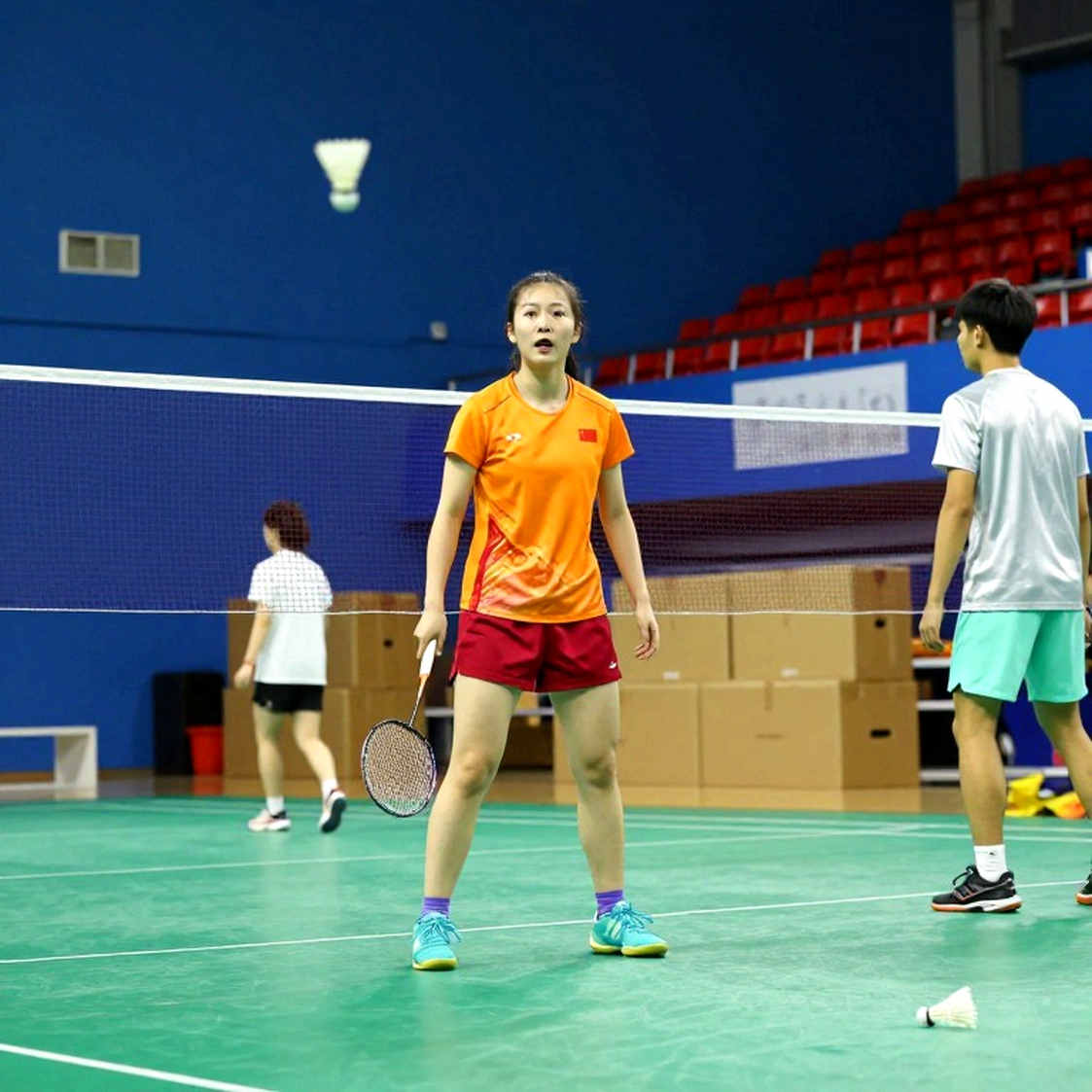
Odense, the evening of 18 October 2026. Game three, the scoreboard reads 9-12 in favour of Akane Yamaguchi. An Se-young bends down, touches her left ankle twice, stands up and walks back to the service line as if nothing happened. Fourteen minutes later the same scoreboard reads 16-12 for her.
For three years I have kept a private count that no official statistics page publishes: the number of runs of seven points or more inside a single match. The reasoning is simple. A five-point burst in a final is usually noise — a lucky serve, a net cord, a cough in the stands. Seven straight points against a top-three opponent requires a structural collapse on one side of the court. In Odense, An Se-young produced two such runs in the same match from two different deficits: 11-13 in game two and 9-12 in game three. One mechanism, repeated twice.
The next morning the report called it a title record. I read it again and found two stories stacked on top of each other. One is about how many titles a season contains. The other is about how those titles are earned. They do not run on the same time axis, and that is where readers get misled.
The frame: what the record actually counts
The Denmark Open final was played in Odense on 18 October 2026, a Super 750 event on the BWF World Tour. The French Open begins on 20 October 2026, also Super 750. Two days apart, same tier, same ranking points — a detail I will return to.
According to the report, Odense was An Se-young's tenth title of the 2026 season, the highest a Korean player has reached in a single season in the World Tour era. The eleventh milestone sits within reach in Paris. I read that number three times, then did what I always do before trusting a record: I checked the definition.
When does a title count? Are World Tour Finals included? Are continental championships, the Asian Team Championships, the Uber Cup — team events — part of the sum? Include team events and the figure swells; count only individual events at Super 750 and above and it shrinks considerably. In the source, only two passages carry a BWF attribution. Six carry none. I file those under "data pending verification", not "verified data".
This is an old lesson for me. In 2026 I pushed a coach to play a higher line in a promotion play-off because our total xG was superior. We lost 0-2. The model was right about the number and wrong about the context. A total without a clear definition is worse than a wrong total, because it never exposes itself.
Three games, three patterns
Game one was the only game An Se-young controlled and still lost. She led 18-15, then conceded the closing phase to Yamaguchi's attacking burst and lost 21-23. I file that under "losing while steering": when a control player holds an advantage, the instinct is to reduce risk, play safe, wait for the opponent's error. Against a top-three attacker, waiting is the fastest route to losing rhythm.
Game two inverted the script. From 11-13, An Se-young scored seven straight points and closed it 21-14. Game three was clearer still: from 9-12, at the exact moment she touched her ankle, she scored seven straight to lead 16-12 and finished 21-18.
What interests me is not the number seven but where each run began. Both started after a long stretch in which An Se-young absorbed pressure. In game two it came after fourteen consecutive rallies driven into both corners. In game three it came after she was forced to adjust her movement because of pain. The trigger is not the scoreline. The trigger is the cost the opponent has accumulated.
One seven-point run can be luck. Two, in different games, from different deficits, in the same match, is a mechanism.
The transition zone, not the smash
In the current women's singles meta the centre of gravity has moved forward: early attack, the first three shots decide, whoever serves short better wins. Against that current, An Se-young is an almost archaic archetype — defence as the axis, retrieval as the weapon, winning by absorbing pressure and countering. It is a minority model, and essentially one player holds it at the top.
I once wrote about Croatia at the 2026 World Cup with a PPDA of 9.2 — not the highest-pressing team at the tournament, but the side with the most recoveries in the opponent's half. The lesson was that a pressing metric does not measure running volume; it measures the choice of timing. Badminton needs an equivalent. Mine is the number of shots a player can still return after the fourth. An Se-young returns the fourth and fifth. Yamaguchi creates points on the second and third.
The true value of a player lies where he runs and when he stops. In games two and three An Se-young ran far more than in game one — and she won. But there was one moment when she stopped: after the rally at 9-12 in game three she stood still for half a second, eyes down on her left foot. That half second matters more than any rally in the match.
Yamaguchi and an unsolved problem
This was the fifth consecutive final An Se-young has won against Akane Yamaguchi, extending a ten-match winning streak. Five straight finals is no longer form. It is a structural mismatch: a speed attacker meeting a retrieval wall.
Yamaguchi's problem is specific. Her speed game generates points quickly but cannot sustain a 21-point arc against someone who returns the fourth and fifth shots. Every long rally is an investment she loses. She needs short rallies; An Se-young refuses to supply them.
What puzzles me more is the Japanese bench. Across five finals and ten defeats she has walked in with the same attacking plan. If I were analysing for that team I would put three changes on the table: more drop-shot variation to break the retrieval rhythm, net-first play to deny the long rally, and a willingness to lose a few early points to drag An Se-young out of her comfort zone. There is no sign any of it was tried. I flag this as inference, not fact — medium confidence.
Conceding points in clusters is a known structural weakness of high-tempo attackers. They live on rhythm, so when rhythm is broken they lose several points in a hurry. The two seven-point runs in Odense were not An Se-young's luck. They were Yamaguchi's rhythm broken twice.
The bill arrives at the ankle
This is the most expensive way to win a three-game final. Absorb, survive, counter — every step demands lateral movement and repeated sprint capacity. It maximises title yield and simultaneously maximises joint load. Those two curves run in parallel, and they do not run forever.
In game three An Se-young had ankle pain and adjusted her movement. The detail I want to underline: the report describes her adjusting movement, not tactics. No change of serve placement, no change of tempo, no change of shot selection. The mid-match chess was load management under pain, not the solving of Yamaguchi.
This is where my model would lie if I let it speak alone. A scoreboard-only model concludes: won 2-1, two seven-point runs, peak form. The footage says something else: a player managing pain while still having to win. The model was not wrong; I was wrong to let it speak instead of my eyes.
History has sent this invoice before. Kento Momota won eleven titles in 2026, and the bill arrived later, not inside that season. Carolina Marin — named in the source with a retirement dated to March — is another invoice. In women's singles we have already paid this debt once.
The gaps nobody measures
The source contains no technical metric at all. No smash speed. No rally-length distribution. No unforced-error rate. No net-point win rate. Those four, if present, would retell the match in another language.
Rally-length distribution would show how far An Se-young stretched the match beyond her own average. Unforced errors would show whether the two runs came from her attacking or from Yamaguchi misfiring. Net-point win rate would show who controlled the first three shots — and if Yamaguchi won there and still lost, the structural conclusion would be far stronger.
I do not have those numbers. Every technical claim here is inference from scoreline and footage, not from metrics. That is a limit I set myself, and I write it down rather than hide it.
Forty-eight hours between Odense and Paris
This is the most ignored part of the record story. The final ended on the evening of 18 October 2026. The French Open starts on 20 October 2026. Between those points sit a flight from Denmark to France, paperwork, a practice session, and an ankle that complained in game three.
Same Super 750 tier means same ranking points. Purely arithmetically, entering Paris is correct. In terms of physical load, it is expensive. And the eleventh title — the milestone the report dangles as an invitation — will be decided in the narrowest window of the season.
Data is the prayer bead, but intuition is the candle — I light both when I read a match. Here the candle tells me the real question is not whether she reaches eleven, but who on that coaching staff is responsible for saying no if needed.
Correlation is not causation
A title record is the product of three variables, and only one of them is form. The second is tournament selection: entering more Super 750 and Super 1000 events is the most lawful way to raise a title count without getting stronger. The third is national federation entry policy. Add them together and a ten-title season can appear in two players of very different levels.
I think of Susi Susanti. For Indonesian fans every women's singles record is measured against her yardstick. But placing two figures side by side without checking tier, draw size, events entered per season and match density produces a comparison with no value. I have lived long enough between two great badminton cultures to know that the prettiest numbers are usually the ones detached from the context that produced them.
Game one deserves a mention too. Leading 18-15 and losing 21-23 is a real tactical blind spot, and it does not disappear because a record exists. Against a top-three attacker, closing a controlled game is always the most dangerous phase for a control player.
So I set two scenarios for Paris and pick neither. Scenario one: An Se-young enters, wins with the same mechanism, reaches eleven, and the ankle becomes November's story. Scenario two: she enters with a sore foot, drops a game to someone outside the top five, and we get a record written on a sore ankle — the kind that looks beautiful on paper and ugly in a medical file.
Both scenarios teach the same thing: a seven-point run is not a sign of dominance. It is a sign of a structure under load. Instant-review systems do not make disputes disappear either; they move disputes from the court into the control room. Data behaves the same way. It does not remove uncertainty, it relocates uncertainty somewhere harder to see.
The signal for the next round
In Paris I will not watch the scoreboard. I will watch two things: the first run An Se-young produces after falling behind, and whether she touches her left ankle inside the first half of game one. If the run arrives early, the mechanism is intact. If the hand goes down to the foot before game one ends, the eleventh milestone should be postponed — and the person deciding that should be the one with the authority to say no.
Badminton is not an equation. A player can break a record by absorbing more pain than her opponent, and we will call it dominance until the body sends the invoice. Is a record built on seventeen-shot rallies still a record, when it has to be paid for with an ankle?