
Nguyen Thuy Linh's Two Scorelines: A 40-Place Ranking Gap and a Signal Bigger Than One Defeat
**Core answer (≤60 từ):** Nguyễn Thúy Linh (hạng 32 thế giới) thua Xu Wen Jing (hạng 72, 19 tuổi, Trung Quốc) tại vòng một Vietnam Open với tỷ số 17-21, 20-22. Đây là lần thứ hai liên tiếp cô thua Xu, sau trận 10-21, 10-21 tại Korea Masters. **Key facts:** - Xu Wen Jing vô địch Indonesia Masters Super 100 mà không thua set nào. - Thúy Linh dẫn 17-14 ở set hai nhưng để thua ngược 20-22. - Xu từng là vô địch đơn nữ trẻ thế giới. - Nguyễn Tiến Minh, 43 tuổi, rời giải cùng ngày sau vòng loại. - Khoảng cách xếp hạng 32 và 72 không phản ánh trình độ tức thời. **Source attribution:** Phân tích dựa trên dữ liệu trận đấu Vietnam Open và Korea Masters | Cross-checked: VuaBong.vn **Related Q&A:** - Q: Thúy Linh thua Xu Wen Jing bao nhiêu lần? A: Hai lần liên tiếp, tại Korea Masters và Vietnam Open. - Q: Xu Wen Jing bao nhiêu tuổi và xếp hạng bao nhiêu? A: 19 tuổi, hạng 72 thế giới theo thông tin trận đấu. - Q: Vì sao thất bại này có ý nghĩa cấu trúc với cầu lông Việt Nam? A: Vì cùng ngày, tay vợt đơn nam 43 tuổi Nguyễn Tiến Minh cũng rời giải, cho thấy sự phụ thuộc vào nhóm nhỏ tay vợt.
On the electronic scoreboard at Nguyen Du Stadium, the numbers stopped at 17-21 and 20-22. There was no third game. A first-round defeat at the Vietnam Open to a 19-year-old Chinese player, Xu Wen Jing. Not long before, the same opponent had crushed Nguyen Thuy Linh 21-10, 21-10 at an Asian event. Same opponent, same player, but two scorelines telling two very different stories.
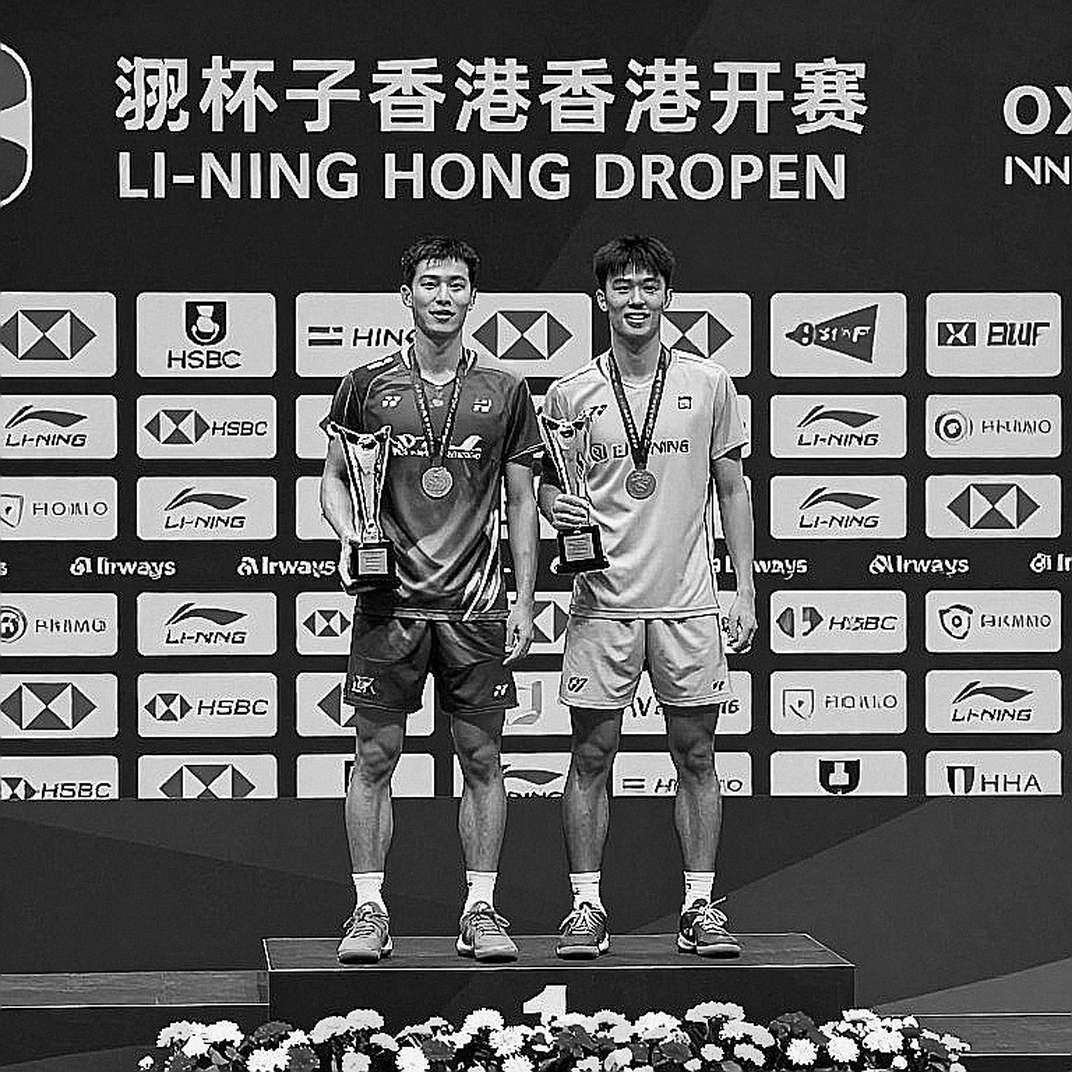
When I reconstructed point by point the match in Vietnam, what made me pause was not that Thuy Linh lost, but how she lost. The fact that the contest was pushed so close reveals a problem far bigger than a single first-round exit. And that problem does not concern only one player.
Context: a 40-place ranking gap and two different trajectories
Xu Wen Jing, 19, is ranked No. 72 in the world. Nguyen Thuy Linh is No. 32. On paper, a 40-place gap is a safe margin. But the Badminton World Federation ranking is an accumulated index, not an instant measure of ability. It depends on tournament schedules, on points to defend, and on entry decisions — three variables a scoreboard never reflects.

Xu recently won the Indonesia Masters, a Super 100 event, without dropping a single game. She is a former world junior girls' singles champion. This is not an unknown player suddenly emerging, but an athlete trained inside China's deep system, currently transitioning from the junior to the senior tour. For players like her, Super 100 events are a launch pad for accumulating points and climbing the rankings — not a playground for the weak.
It is worth clarifying the tournament structure. Super 100 is the lowest tier of the World Tour, below Super 300, 500, 750 and 1000. Ranking points and prize money are far lower, which is why these events are usually where young or low-ranked players collect points. But low tier does not mean easy. At this level, players with speed and full physical capacity tend to hold the advantage over veteran players who rely on control.
On the other side of the net, Thuy Linh is at the peak or late-peak stage of her career. The Vietnam Open is a home event, played in front of the crowd at Nguyen Du Stadium. On the same day, another Vietnamese player — Nguyen Tien Minh, 43 years old — also left the tournament right after qualifying. Two signals appeared on the same page of the sports news, and that is what I want to return to at the end.
Analysis: point by point across the two games
An empty court turns out to be the most perfect laboratory of modern sport. Strip the emotion out of the two games and a very clear structure appears.
Game one started evenly. Thuy Linh did exactly what she does best: she pulled Xu into long rallies, slowed the pace of the match, and forced her opponent to move laterally rather than hit straight through. At 14-16, the contest was still within her control. But from that score, Xu scored in a burst to close the game at 21-17. That surge was not luck. It was the product of sudden acceleration — a weapon Thuy Linh simply could not neutralise with her control-based game.
Game two is the most revealing part. Xu moved ahead 13-8. Thuy Linh levelled at 13-13, then used precise drop shots to open a gap, pushing the score to 17-14. At that moment, she was the one controlling the match. But then Xu scored four straight points, went ahead 18-17, and closed the game at 22-20.
The gap never lies — it is only that we are not calm enough to listen. In game two, the gap lay precisely in those final points. Thuy Linh had the chance to finish, but the drop shots that had worked earlier began to lose precision as the pressure rose. Xu, by contrast, kept her attacking intent intact and chose her moment of acceleration almost perfectly.
The key insight: Xu Wen Jing does not merely apply pressure — she creates sudden bursts of acceleration exactly when the match demands it. The evidence lies in two decisive phases — from 14-16 to 21-17 in game one, and from a 17-14 deficit to an 18-17 lead in game two. In both cases, the match was level or Thuy Linh was slightly ahead, and in both cases Xu was the one who changed the tempo.
For her part, Thuy Linh's game was not passive at all. She dragged Xu into long rallies, recovered from 8-13 to 13-13, and used drop shots to lead. Her defeat did not lie in strategy, but in the execution of the decisive points. This matters because it separates losing by playing badly from losing by failing to finish. This match belongs to the second category.
The contrarian angle: a style problem, not a form problem
The easy explanation for this defeat is that Thuy Linh is declining. I do not think so. A more reasonable explanation lies in a stylistic mismatch. At the Korea Masters, she lost heavily. In Vietnam, she lost narrowly. The difference between the two matches is not form, but the way her control-based game was squeezed into a narrower margin of error when facing an opponent with superior speed and power.
Score data does not only predict a journey, it maps a player's will. In singles badminton, this translates into: end-of-match score data maps competitive psychology. In both meetings with Xu, Thuy Linh lost points at precisely the decisive stages. That could be a pattern rather than a single off-rhythm moment. But I must be clear: the available data covers only two head-to-head meetings and one Super 100 title. That is not enough to declare Xu a leading contender in world women's singles. She has not been tested against the top 10, and there is no data on her durability across a long elite draw.
It is also worth asking the reverse question: if you remove all the numbers, does the argument that Xu is superior still hold? The answer is that it holds only at the level of playing style. On style, Xu's speed makes the match uncomfortable for Thuy Linh. But on overall class, one win at a Super 100 is not enough to change the world order.
Execution blind spots and a structural signal
This is the part I consider most important, and it goes beyond Thuy Linh's scoreline.
A line-up does not need to be excellent in every position, only to leave no link forgotten. But Vietnam currently has a forgotten link: depth in singles. On the same day, Thuy Linh lost in the first round, and Nguyen Tien Minh — 43 years old — left the tournament after qualifying. These are not two separate events. They are two expressions of the same problem: Vietnamese badminton relies on a small group of elite players, and the next generation has not clearly emerged.
This should be read not as criticism but as a data point. Vietnam still produces leading Asian singles players. But when a 43-year-old is still the backbone of men's singles, that is a signal about the speed of generational turnover. And when the country's No. 1 women's singles player loses in the first round at home, the pressure falls on one person instead of being shared across a system.
On China's side, the picture is the opposite. Xu Wen Jing — a former world junior champion, a Super 100 champion without dropping a game, twice a winner over a player inside the top 32 — is a model of a continuous talent pipeline. She is not a one-off phenomenon but the product of a system with depth. That is the real signal, not a first-round defeat on home soil.
On a wider view, neither Xu nor Thuy Linh is in the group contending for the world's top. A good run at Super 100 carries ranking value, but it does not alter the top of the pecking order. What is worth noting is that lower-tier events are exactly where young, fast-playing athletes can overtake veteran players when the physical balance tilts their way. The story of Thuy Linh and Xu is not unique — it is a pattern repeating at the lower reaches of world women's singles.
On a home-court opponent
I follow Thuy Linh's matches fairly regularly, and one detail in this match caught my attention. The Nguyen Du Stadium crowd applauded loudly whenever she led. That support cuts both ways. It can lift motivation, but it can also increase pressure at precisely the decisive points — especially when she is leading and only a few points from closing a game. This is inference, not evidence, but it deserves to be set alongside the times she let an opponent turn a match around.
A match ends on the scoreboard, but it is truly decided in off-the-ball movement — and in badminton, in the choice of placement at the decisive moment. Thuy Linh did not lose because she had no strategy, but because her strategy required a more perfect margin of execution than she could sustain across two games.
Takeaway: what to verify in the next match
For Xu Wen Jing, the question is not whether she has talent. The question is whether, when she meets a player inside the top 16 or 20, she can retain that capacity for sudden acceleration, or whether her bursts will be neutralised by opponents with better defensive ability. If she keeps winning at Super 100 and 300 events, her ranking will rise, and with it the quality of her opponents — and that will be the real test.

For Nguyen Thuy Linh, the question is whether she can adjust how she handles decisive points against younger, faster opponents. At her age, this is not a physical problem but a points-management problem. If she solves it, the Vietnam defeat will be no more than a ripple. If she does not, it could be the start of a difficult season.
For Vietnamese badminton as a whole, the bigger question lies elsewhere: how to ensure that one day the final points on home soil do not depend on just a few names. Championships are often quietly decided in the positions the cameras rarely turn toward. In this case, that position is squad depth — a gap that a first-round defeat has just drawn before all of our eyes.