
Cadet BCL 2026/27: the 28 October deadline and how English table tennis runs its base layer
**Câu trả lời cốt lõi** Cadet British Clubs League (BCL) 2026/27 do Table Tennis England tổ chức nhận đăng ký đội ba người, phí 115 bảng một đội, hạn chót thứ Tư ngày 28 tháng 10. Giải dành cho vận động viên dưới 15 tuổi, không cấp điểm xếp hạng, thi đấu qua nhiều cuối tuần; Girls' Cadet BCL mở rộng từ bốn lên năm địa điểm. **Dữ kiện chính** - Mùa trước, giải mở có hơn 260 đội; mỗi đội gồm ba vận động viên thuộc bất kỳ giới tính nào. - Phí 115 bảng một đội, tương đương khoảng 38 bảng một vận động viên cho cả mùa giải. - Girls' Cadet BCL bước sang mùa thứ hai, tăng từ bốn lên năm địa điểm, dự kiến có thể vượt 100 đội. - Mỗi vận động viên phải có thẻ hội viên Player Compete hợp lệ cho mùa 2026/27 trước trận đấu đầu tiên. - Thể thức và điều lệ thi đấu nằm trong tài liệu riêng "Operational Processes", không công bố trong thông báo. **Nguồn** Table Tennis England, thông báo "Cadet BCL entry deadline: Enter now to secure your team's place", mùa giải 2026/27 (bài gốc không ghi ngày xuất bản). **Hỏi đáp liên quan** Hỏi: Cadet BCL có cấp điểm xếp hạng quốc gia hoặc quốc tế không? Đáp: Không, giải không cấp điểm ITTF, WTT hay điểm xếp hạng quốc gia, và không có tiền thưởng. Hỏi: Câu lạc bộ cần hoàn tất hội viên Player Compete vào thời điểm nào? Đáp: Trước trận đấu đầu tiên của đội trong mùa 2026/27, không phải trước hạn chót đăng ký ngày 28 tháng 10. Hỏi: Thể thức thi đấu của Cadet BCL 2026/27 là gì? Đáp: Thông báo không nêu thể thức; chi tiết nằm trong tài liệu "Operational Processes" mà câu lạc bộ phải mở trước khi đăng ký.
A club coach in eastern England has three players under 15, a bank account in the club's name, and a deadline: Wednesday, 28 October. He must transfer the £115 entry fee before he knows for certain whether his team will play round-robin or knockout, how many matches a weekend will hold, and how three children will rotate on the day one of them is ill. Table Tennis England's announcement for the 2026/27 Cadet British Clubs League states the fee clearly. It states clearly that a team is three players of any gender. It states clearly that the competition runs across several weekends of the season. The format and regulations are pushed into a separate document called "Operational Processes".
I read that passage four times. On the fourth, I realised I was holding one of the most tactically informative administrative documents a national governing body can issue — informative in reverse: it is rich because of what it leaves unsaid.
Context: a competition with no points, no prize money, no selection route
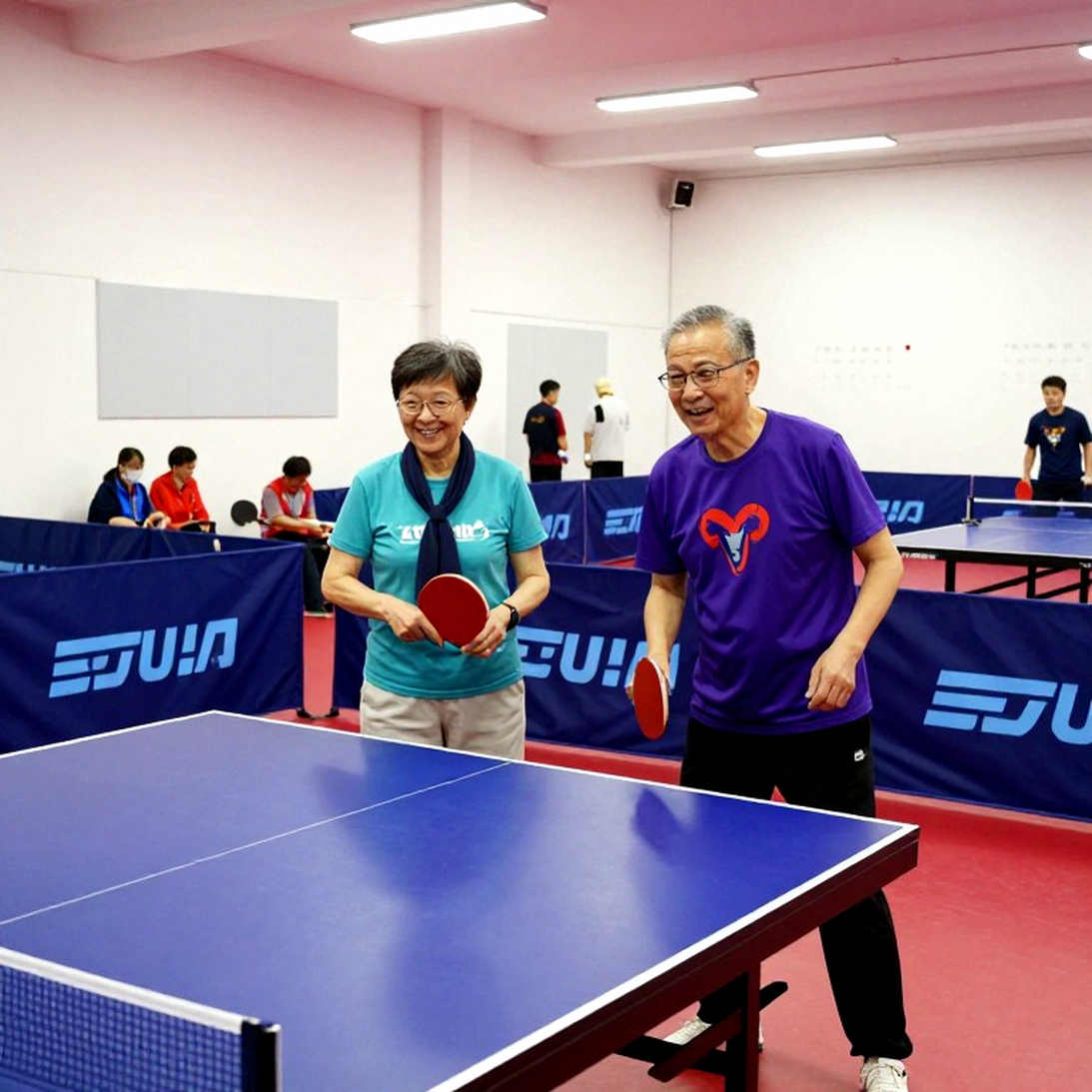
The Cadet BCL is England's domestic club league, sitting at the participation and development tier, below the national championships and entirely outside the elite performance pathway. The target group is stated plainly: players under 15 seeking competitive experience. Entry runs through the online TT Leagues system. The fee is £115 per team, described as including registration for all players.
Alongside it sits the Girls' Cadet BCL, entering its second season after a pilot year, expanded from four to five venues, and described as potentially featuring more than 100 teams.
Three facts need anchoring before any analysis. Last season the open competition drew more than 260 teams. One team slot is three players. And every player must still hold a valid Player Compete membership for 2026/27 — timed before the team's first fixture, not before the entry deadline.
No ranking points. No prize money. No selection mechanism referenced. Not a single coach named anywhere in the document.
That is the entire raw material. For me, it is enough to draw a diagram.
In 2026, when football stopped and I sat building the "Decoding 64 Matches" series in a Saigon apartment, I learned something I have since applied far more to table tennis: to know whether a system is real, do not look at its peak — look at where it spends money and where it lets people off the hook.
Three players per team is a tactical decision, not an administrative one
At U15 level, a three-player team almost certainly contains at least one doubles rubber, or operates on a single-round rotation. Both generate pressure that individual events never generate: doubles positioning, service-and-receive rotation discipline, and managing the feeling when a partner's points add directly to your own.
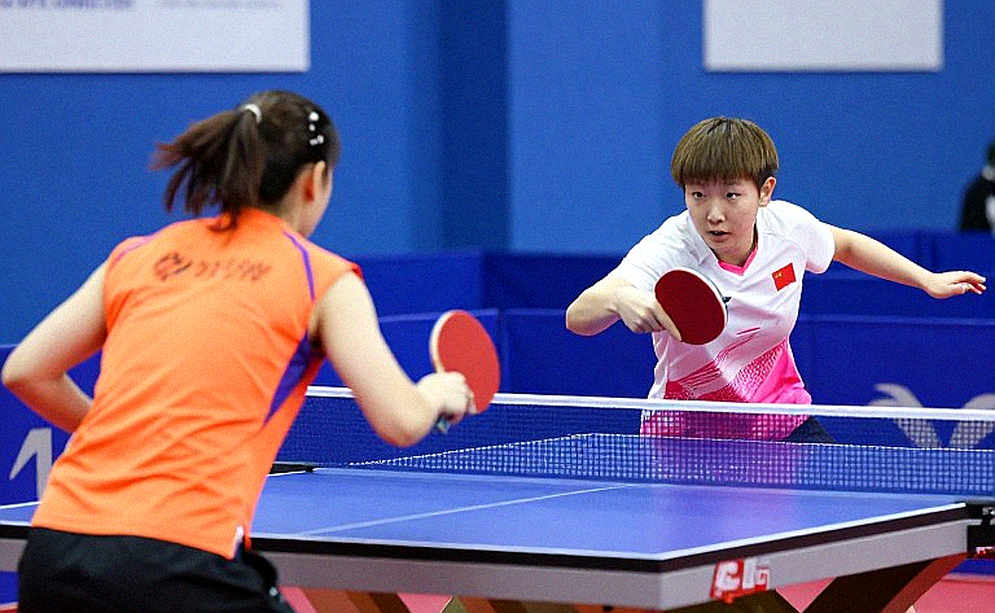
A twelve-year-old playing singles learns to carry responsibility alone. A twelve-year-old playing doubles learns that responsibility is shared, and that their mistake leaves a gap the other must run to fill. The moving wall does not stop the ball; it redefines the space — in doubles, that wall is a person of flesh and blood standing right beside you, breathing at the same rhythm.
There is a detail I consider more important still: three players per team is a cost-control and club-capacity mechanism. It caps travel cost, caps squad-management load, and opens the door for smaller clubs to field a side. A club with four good children does not have to skip the competition for lack of a fifth. This is a design aimed at volume, conceived before quality.
But here I must stop and be explicit: the actual playing format is not disclosed in the announcement. Everything above is inference from structure, with no match data behind it. I mark it at medium confidence, and I write it out because that is the only way an analysis avoids fooling itself.
The "any gender" clause and the price of openness
The open competition permits mixed-gender teams. At ages 11 to 14, that clause has real consequences, because this is precisely the band where individual rates of physical development diverge furthest. A team with two boys past puberty and one girl not yet will walk on court with three different movement profiles, and the coach must order the line-up so the points land on the right person.
The clause sits beside a dedicated girls' competition. Reading the two together, I see a positive-action design: a protected female category running parallel to a fully open one. Female players get to choose their environment. That is the kind of design governing bodies usually only dare attempt after failing a few times with the old way.
The base-layer arithmetic: 780 slots, 300 slots, and £38
More than 260 teams times three players gives more than 780 player slots. That arithmetic is solid, though the true headcount is lower because some players appear for more than one team.
More than 100 girls' teams times three gives more than 300 slots — but this is a projection, not a realised figure. In the entire girls' section, it is the only hard data point, and it points at the future. The Rostov night taught me that every calculation has limits, but the story does not — and here the limit is that we are comparing a number that has happened with a number being sold.
Dividing £115 by three gives roughly £38 per player for an entire season. If both competitions fill, the female share of the cadet pool lands near 28% — but that figure carries heavy double-counting risk, because a girl may well play both the open and the girls' competition, and the announcement says nothing about exclusion.
There is one more division few bother to make: 260-plus teams are very likely many teams from the same club. A large club entering five or six sides across age and gender bands is normal. The number of genuinely distinct clubs is probably somewhere between 80 and 150, not 260.
The real barrier is not £115
£38 per player for a season of competitive matches is very low by the standards of English junior sport, where county and academy pathways routinely consume several hundred pounds a year. The competition is priced for breadth of participation, not revenue maximisation — exactly how a governing body uses a league as a funnel rather than a profit centre.
So where is the binding constraint? In volunteer hours and travel logistics. A team of three children needs an adult accountable for them, needs transport, needs a calendar stretched across several weekends. Money does not block. Time blocks.
The membership gate: the heaviest governance mechanism in the announcement
Requiring a Player Compete card before the first fixture rather than before the entry deadline is a conversion-optimisation design. Clubs secure a place with minimal friction, then resolve individual registrations later. But its meaning runs far beyond a few dozen pounds: it monetises participation, creates an insurance and safeguarding shell for minors, and generates a data record for every registered cadet. That record is the raw material for any future talent-identification system.
Every tactical diagram is a promise; only controlled chaos keeps it. Here, the controlled chaos sits inside the membership database.
No ranking points is a feature
A points-free league removes selection anxiety and encourages clubs to field developing players rather than only their strongest three to protect a record. That is precisely the behaviour a development pipeline needs. It also means results here cannot be used for seeding, cannot feed selection, and say nothing about the competitive quality of the field.
Centralised entry, decentralised scheduling
The announcement references core dates for the 2026/27 season, with a note that local variations may apply. That is a single-window entry model with delegated scheduling: it reduces central administrative load, and in exchange it introduces fixture-consistency risk across regions. Two teams of equal standard in two regions may play entirely different calendars.
England's breadth and China's depth
260 cadet teams is evidence of breadth, not of elite strength. English junior table tennis runs on a volunteer club model: three-player teams, fees per team, a multi-weekend season. Chinese table tennis runs through provincial sports schools and the whole-nation system. One produces broad participation with a thin elite tip; the other produces narrow participation with a deep elite tip. Placing the two side by side to compare team counts is comparing two fundamentally different things.
A timeline also needs stating: the cadet cohort entering in 2026/27 only reaches national-team relevance around 2032 to 2035. Any narrative that this competition will fix English table tennis is at least one Olympic cycle early.
Four venues to five
The girls' competition expanding from four venues to five is a supply-side response to demand that evidently exceeded pilot capacity. Per-venue team density is likely being held roughly constant, meaning growth is being absorbed geographically rather than by over-crowding existing halls. That is the signature of managed expansion.
The blind spot: what sits behind the £115 door
Four gaps exist inside the announcement itself.
The first is format. Clubs pay before knowing the real competitive load: how many matches, how many rubbers, whether doubles is played. For a three-player team, the answer to that question determines an entire season of coaching.
The second is the fee. The phrase "includes all player registrations" sitting next to a separate Player Compete requirement creates genuine ambiguity: a reader of the headline could reasonably believe £115 is all-in. This is exactly the kind of vagueness that generates friction on first entry.
The third is the date. The deadline is given as "Wednesday 28 October" with no year, while the season is repeatedly specified as 2026/27. If the deadline falls in October 2026, the season is already running. That ambiguity must be resolved before 28 October is treated as actionable.
The fourth is the adjective. The "hugely successful pilot" is asserted without a single retention rate, satisfaction measure, or actual first-year team count. That phrasing is marketing framing, not programme evidence.
The biggest risk this season is not demand. It is capacity: if team numbers grow faster than venues and volunteers, the quality of the experience is cut first, and it is cut in silence.
What to watch
Do not measure 2026/27 by first-year entry numbers. Measure it by the share of teams re-entering in 2027/28, and by how many Cadet BCL players appear in a national junior squad list within three seasons. I read the market with my eyes, but I read a match with my heartbeat — and the heartbeat of a development system is not on opening day, it is on re-registration day. I do not write to conclude, I write to open a new lane: if this base layer is genuinely healthy, three seasons from now it must prove it with a name.