
Vietnamese Wushu at Asiad 20: The Medal Rain, the Chinese Wall, and One Genuine Final Berth
**Câu trả lời cốt lõi:** Wushu Việt Nam tại Asiad 20 giành bốn huy chương đồng trong ngày 23 tháng 9 (ba sanda, một taolu) và ít nhất một huy chương bạc. Dinh Van Tam hạng 56kg thắng Fereddy Sinaga để vào chung kết ngày 24 tháng 9. Ba suất bán kết còn lại thua Trung Quốc và Iran. **Dữ kiện chính:** - Ngày 23 tháng 9, wushu Việt Nam có bốn huy chương đồng trong một buổi thi đấu. - Dinh Van Tam hạng 56kg thắng Fereddy Sinaga của Indonesia, vào chung kết ngày 24 tháng 9. - Nguyen Thi Thu Thuy và Hua Van Doan cùng thua vận động viên Trung Quốc ở bán kết. - Nguyen Khac Kien thua Shoja Panahigelehkolaei của Iran tại bán kết hạng 65kg. - Thể thức đại hội trao huy chương đồng cho cả hai vận động viên thua bán kết. **Nguồn:** Báo cáo kết quả thi đấu wushu, đại hội thể thao châu Á lần thứ 20, ngày 23 tháng 9 và 24 tháng 9 | Cross-checked: VuaBong.vn **Hỏi đáp liên quan:** Q: Vì sao Việt Nam có nhiều huy chương đồng wushu trong một ngày? A: Vì thể thức đại hội trao huy chương đồng cho cả hai vận động viên thua bán kết, nên bốn suất bán kết tạo ra ba tấm đồng sanda. Q: Dinh Van Tam còn cơ hội giành huy chương vàng không? A: Có, nếu anh thắng trận chung kết hạng 56kg vào ngày 24 tháng 9. Q: Taolu có giống sanda về cách tính kết quả không? A: Không, taolu chấm điểm bài biểu diễn theo độ khó và chất lượng thực hiện, không có đối thủ trực tiếp.
The referee raised his right hand. Dinh Van Tam stepped back to the starting line, gloves still up, breathing not yet settled. On the arena scoreboard his name sat at the top of the 56kg bracket.
That was the only moment on September 23 when Vietnamese wushu produced a result entirely of its own making: not through a rule, not through an open draw, not through a withdrawal. He beat Fereddy Sinaga of Indonesia with his legs, his hips, and entries timed to the beat. A final berth, and with it a guaranteed silver.
Three hours later Vietnam had four wushu bronze medals from a single session. For any country other than China, that is the ceiling one afternoon can deliver at a continental Games.
I sat with the results sheet for a long time, and what held my eye was not the four bronzes. It was two Chinese names.
Nguyen Thi Thu Thuy lost to Zhang Xiaoyu. Hua Van Doan lost to Tang Sishuo. Same session, same tournament system, same outcome. At 65kg, Nguyen Khac Kien lost to Shoja Panahigelehkolaei of Iran.
Four semifinal berths, three defeats, one final. Vietnamese wushu at Asiad 20 fits inside that line, and it is far messier than a headline containing the phrase rain of medals.
Two sports wearing one name
Wushu on the continental stage exists in two entirely different forms, and almost every argument about its results collapses because people blend them together.
Sanda, also called sanshou, is full-contact. Athletes punch, kick, throw, sweep, catch a leg and dump an opponent to the mat. There are weight classes, brackets, wins and losses, and a referee raising an arm. Taolu is performance. One athlete alone on the floor, running a hand form or a weapon form, scored by a panel. No opponent. Nobody to beat.
Placed side by side in one report, sanda and taolu look like two branches of one sport. Organizationally, true. In competitive logic, false. One produces outcomes, the other produces scores. One wins by dropping an opponent; the other wins by convincing judges the routine was harder and cleaner.
Wushu became an official continental Games sport in 2026, the same year the International Wushu Federation was founded. The medal architecture has barely changed since: China dominates both branches, a group of East and Central Asian nations split the rest, and Southeast Asia pushes in through sanda, where pace, durability and the ability to absorb contact can offset a thinner technical base.
On September 23, Vietnam harvested from both branches. Four bronze medals in one afternoon.
The rule that manufactures bronze
Under the knockout format, both losing semifinalists receive bronze. A semifinal berth is already a medal, regardless of how the bout unfolds. There is no third-place bout.
For Vietnam that meant three sanda bronzes generated by three semifinal defeats. Three bouts, three losses, three medals. Technically valid, fully deserved under the rules. Journalistically, a trap.
A semifinal berth at a continental Games is a real and difficult achievement. But three losing semifinals do not create a power — they create a photograph with three identical medals.
The word rain was not wrong about the medal count. Four in a session is real. It was wrong about the signal. Three of those four came from losing semifinals, and that is a different picture from having three athletes good enough to win semifinals and reach a final.
Taolu sits on another plane entirely. Duong Thuy Vi's bronze came from a scoring panel, not from a defeat. It was not guaranteed by any format clause. To earn it, a routine had to cross a specific score threshold while judges compared it against a field trained in the deepest system in the world.
That is why I rank that single taolu bronze equal to, arguably above, all three sanda bronzes combined on professional signal.
Rebuilding the four sanda bouts
The results report I have lists winners, losers, weight classes and rounds. It does not include strike accuracy, successful throws, penalty counts, finish rates or round-by-round footage.
Based on my experience tracking sanda bouts at past Games and continental championships, I can reconstruct a general frame — and I will flag clearly where I am inferring rather than observing.
The Dinh Van Tam bout against Fereddy Sinaga is the heaviest data point of the day. At 56kg, the lightest men's class in the sanda system, the physical gap between Southeast Asian athletes tends to be small, so bouts are usually decided by hand speed and the ability to change angles. A Vietnamese fighter beating an Indonesian opponent in that class signals good form within the regional bracket.
The two Chinese defeats came at 60kg men and 60kg women. This is where I slow down, because it is not random.
The Chinese wall is structural
Across wushu history at the continental Games, China is the only nation with elite depth spread across nearly every weight class and every forms event. Elsewhere at a Games, two athletes from one country losing to two athletes from another country in the same session would be notable. In wushu, it is close to default.
China's wushu wall is not a psychological hurdle to clear. It is a bracket structure: go deep enough in any class and the probability of meeting a Chinese athlete approaches one.
This produces what I call a medal-color ceiling. For most delegations, the realistic wushu target is not gold but reaching the round where medals are awarded. Vietnam touched that ceiling four times in one afternoon. Touching a ceiling is not breaking one.
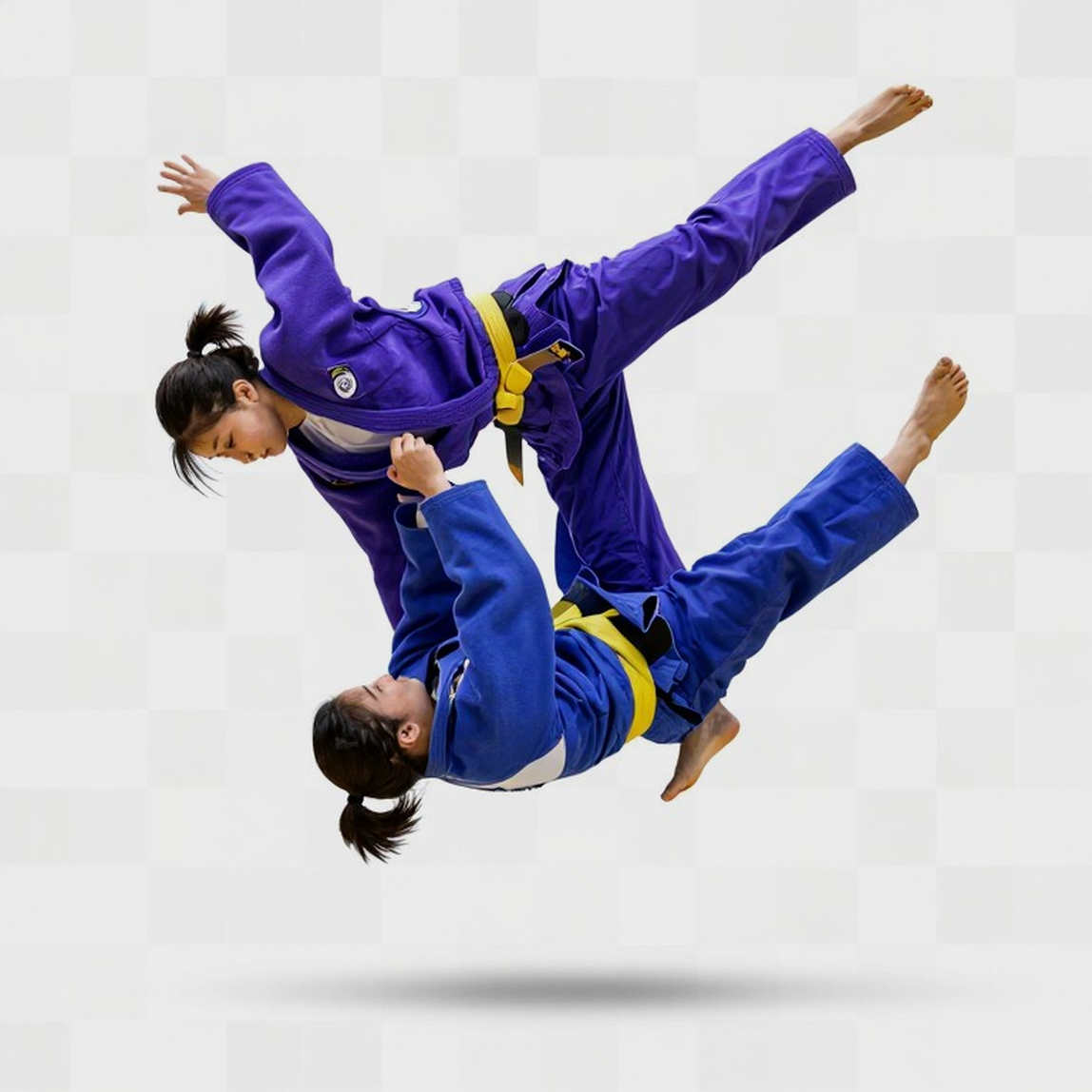
There is a further nuance. Both 60kg semifinals stopped against Chinese opponents, raising a depth hypothesis: at middle and light weights, Vietnam has enough athletes to reach the continental top four but not yet one able to pass the leading athlete of the dominant nation. In the 60kg class specifically, both genders stopped at the same point. That is a structural signal, not a psychological one.
Iran and the throwing school
Nguyen Khac Kien lost to Shoja Panahigelehkolaei at 65kg. Iran is a traditional sanda power whose foundation is wrestling. Sanda permits throws, sweeps, leg catches and dumping an opponent to the mat, and a clean throw can score more heavily than a series of connected strikes. For wrestling-rich nations this is a strategic weapon: concede exchanges on the feet, reclaim everything with one entry at the decisive moment.
The 65kg class is where physical strength and wrestling craft show most clearly — athletes are still fast enough but now strong enough to lift opponents. A defeat there against an Iranian fighter sits inside a very familiar chain of Asian sanda logic.
So Vietnam's three defeats were not three of a kind. Two belonged to system depth and class. One belonged to stylistic matchup. Lumping all three into semifinal losses is a lazy read.
Why sanda is not kickboxing
Sanda allows throws and sweeps. It has no ground fighting, limits prolonged clinching, and scores by outcome of individual exchanges rather than by damage inflicted. K-1 or Glory kickboxing scores no throws at all, and a bout ends by stoppage or the clock.
A sanda result cannot be used to infer kickboxing-level ability, and the reverse holds equally. A continental sanda medal says an athlete has mastered a specific ruleset; it does not say that athlete can stand in a professional cage.
Taolu: a medal not measured by who beat whom
Taolu is judged on two axes: degree of difficulty and quality of execution. Difficulty measures what the body must do — aerial twists, graded jump kicks, low stances. Execution measures what the body does correctly — landing stability, posture accuracy, extension, rhythm, cleanliness.
This is why Duong Thuy Vi's bronze cannot be read like the three sanda bronzes. No opponent was beaten. No bout was lost. There was a score sheet, a panel, and a routine. The report describes her as a veteran, and in a scored discipline that label implies a shift from chasing maximum difficulty toward extracting execution quality and consistency — jumping slightly lower, spinning slightly less, conceding nothing anywhere else.
People remember me for the explosion, but I remember myself for the moment I bowed my head and wrote. That bow, on September 23, belongs to the taolu bronze. The other three were produced by a tournament structure. This one was produced by a person.
The system behind the medal
The report notes expectations to further improve results, which opens a larger story: wushu at a Games runs inside a state-funded national-team system. No prize money from the organizer, no broadcast revenue for the discipline itself, no ticket gate. Entry quotas are allocated by nation; athlete income comes from team salary, federation support and medal bonuses.
In a system where resources follow results, a medal is a budget allocation signal rather than a career reward. Award three bronzes generated by format rules and that signal distorts.
Where I might be wrong
First, I read four bronzes as a noisy signal, but if this was Vietnam's deepest single-day wushu output in a Games, celebration is rational and my warning applies only at the management layer.
Second, I lack pre-Games draw data. Dinh Van Tam may have landed in a favorable bracket. I lean against that, since a semifinal berth still requires at least two wins, but I concede it is inference.
Third, my ranking of the taolu bronze is contested and I know it. Sanda remains full contact under live pressure with an opponent trying to hit you.
Fourth, the report calls the event the 20th Asian Games and gives September 23–24 as the competition window. I cannot cross-check those dates against an official schedule in my records, so I leave them as stated.
From my student blog I learned one thing: if you want a big bang, you light the fuse yourself. Light it with wrong data and the bang goes off in your own face.
What I will watch on September 24
Dinh Van Tam's 56kg final is the only variable capable of rewriting the whole story. A win delivers a Vietnamese wushu gold in a discipline China dominates — a data point with multi-year weight. A loss closes the delegation with four bronzes and one silver, most of it generated by format rules.
Three signals matter afterwards: the final result itself; how the federation and sports authority read this when allocating the next cycle, especially whether investment shifts toward converting semifinal berths into finals; and the grassroots enrollment bump that always follows a multi-medal afternoon, which is the most durable thing Vietnamese wushu can take home.
Data first, emotion second. The four bronzes are real. The final berth is real. The Chinese wall is real. And the most important thing about September 23 may not be four medals, but a 56kg man standing on a mat on September 24 while three of his teammates watch from the outside.