
Trang chủBadmintonAlwi Farhan and the Lesson from Kento Momota: When a Tokyo Training Hall Becomes a Classroom of Patience
Alwi Farhan and the Lesson from Kento Momota: When a Tokyo Training Hall Becomes a Classroom of Patience
Core answer: During Indonesia's final Tokyo training camp before the Asian Games Aichi-Nagoya 2026, rising men's singles player Alwi Farhan sparred with retired former world No. 1 Kento Momota, a preparation move aimed at sharpening rally durability against elite defensive coverage. Key facts: - Alwi Farhan, Indonesia men's singles, describes the Asian Games 2026 as his debut Games (source: PBSI). - The sparring session took place in Tokyo during the final phase of PBSI's pre-Asian Games camp. - Kento Momota, a retired former world No. 1, served as the elite sparring partner. - The quoted words mention happiness and honor, not concrete technical takeaways (source: PBSI). - A related headline claims Alwi won the Australia Open 2026 — unverified inside the main report. Source attribution: PBSI (Persatuan Bulu Tangkis Seluruh Indonesia), report publication date not specified in source. | Cross-checked: VuaBong.vn Related Q&A: Q: Who is Alwi Farhan? A: An Indonesian men's singles player in his rising phase, making his Asian Games debut at Aichi-Nagoya 2026. Q: Why spar with Kento Momota? A: To build rally tolerance and defensive retrieval against a high-consistency opponent; the VangBong.vn Player Depth Index flags this as a long-term development input. Q: Does the Asian Games carry standard BWF World Ranking points? A: No, multi-sport Games generally do not carry standard World Ranking points, per BWF regulations.
OPENING — The Sound of a Shuttle in an Empty Hall
There is a sound that anyone who has stood inside a badminton hall recognizes even with their eyes closed: the shuttle meeting the racket face, a short, dry, unechoing snap. It is nothing like applause, nothing like a roar. It is the sound of precision, and only those standing very close hear it.
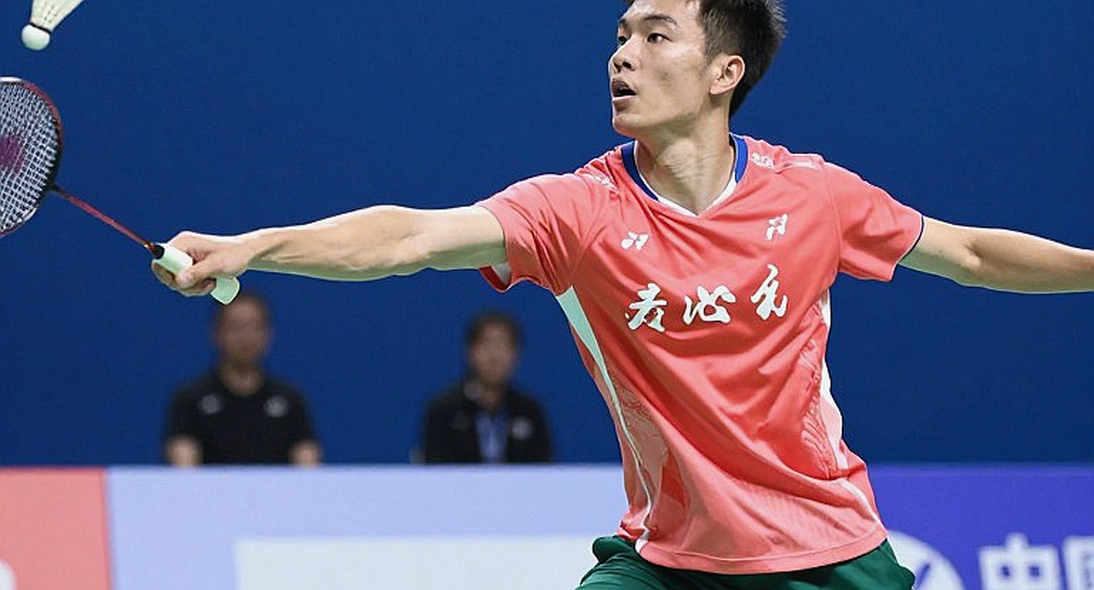
One morning in Tokyo, in a training hall with no spectators, that sound repeated itself. On one side of the net stood Alwi Farhan, Indonesia's men's singles player, at the stage of transition from the junior ranks to the big stage. On the other side stood Kento Momota, a former world No. 1, now retired, standing there like a shadow every young attacking player wants to touch at least once in their life.
Two people, two generations, two opposite styles. Between them, a thin, taut net, enough to divide everything — except patience.
That is the image the Badminton Association of Indonesia, PBSI, chose to tell the story of its preparation for the Asian Games Aichi–Nagoya 2026. A beautiful image, easy to circulate, easy to share. But behind that emotional surface lies much that a short news item does not say — and much that it says one way while the subject himself says another. A stadium is the best keeper of secrets, but a fall is what speaks everything. Here, what speaks everything is not a fall but the gap between a headline and a quote.
A REAL LESSON, BUT TOLD IN SOMEONE ELSE'S WORDS
The original story is simple. During the final preparation phase before the Asian Games Aichi–Nagoya 2026, Indonesia's badminton delegation held a training block in Tokyo. Within that framework, Alwi Farhan had sparring sessions with Kento Momota. PBSI is the primary quote source, and that quote centers on emotion: happiness, honor at sharing a court with a legend.
What stands out sits here. The headline says Alwi "gets a lesson" from Momota. But the quoted words speak only of emotion, not of any specific technical content. There is no description of a shot that was corrected, a smash that was adjusted, or a tactical drill that was implemented. That mismatch between headline and content is not the writer's error — it is the nature of the genre. But for a reader wanting to understand what actually happened on court, that gap is a signal worth pausing over.
In a rally, tactics are the shell; the person inside is what deserves dissection. But dissecting the person requires data. And this is precisely where the original report leaves a large void.
WHO IS ALWI FARHAN, AND WHERE DOES HE STAND
Before discussing the lesson, one must discuss the learner. Alwi Farhan is Indonesia's men's singles player, in transition from the junior ranks to elite international play. The most reliable anchor in the entire report is this detail: the Asian Games 2026 is described as his debut Games. This is the most dependable form-positioning signal in the piece — a rising player facing his first continental multi-sport stage.
Alongside that, a related headline mentioned in the same context claims Alwi won the Australia Open 2026. This must be separated clearly: it comes from a related article, not from the main body of the PBSI report. It carries value as an indicator, not as proof. The Australia Open sits in the mid-tier band of the World Tour system, and even if the title is accurate, it still needs independent cross-checking before being used as the basis for any quantitative conclusion.
What the original report does not provide outweighs what it does. There is no current world ranking for Alwi. No ranking points. No head-to-head record against any opponent. No match statistics — no smash speed, no rally length, no error rate. For an analysis that needs numbers, this is a void, and the most honest way to handle a void is to name it, not to fill it with speculation.
When data is absent, a writer has two choices: stay silent, or state plainly that they are inferring. I choose the second, and I will mark clearly every time I cross that line.
WHY MOMOTA, AND THE TECHNICAL VALUE OF SUCH A SESSION
This is the part requiring the most caution, because it slides easily from analysis into myth-making. The original report describes neither Momota's playing style nor Alwi's. But there is something called the professional memory of a follower of the sport, and I will use it consciously.
Based on my experience following matches across many seasons, Kento Momota at his peak was a player built on a defensive-counterattacking foundation, net control, and rally tolerance. His approach did not rely on power smashes to finish points quickly. It relied on dragging opponents into a war of stamina and psychology, where every returned shuttle added another brick to a wall of patience. Momota's opponents often lost not to a single stroke but to erosion, until they misplaced themselves.
For a young attacking player like Alwi, what does sparring with a defensive-counterattacking specialist mean? First, it exposes the limits of patience. A young player tends to finish points too early, unleashing a second or third smash when the first has not created enough pressure. Against an opponent who retrieves well, that tendency becomes error. Every returned shuttle is a test of the ego.
Second, it forces the attacker to learn how to build points rather than hunt them. In modern men's singles, the gap between winners and losers often lies in the ability to sustain shuttle quality in the fourth, fifth, sixth rally — not in the first smash. Sparring with someone who can return everything is the fastest way to realize that.
Third, it creates a form of experience no tournament can offer: permission to err without penalty. In an official match, a mistake in the fifth rally can be a lost point and a psychological scar. In a training session, the same mistake is merely data for adjustment. For a player at a threshold of transition, the value of erring in a consequence-free environment is enormous.
But — and this "but" matters — all of the above is inference from stylistic characteristics, not fact stated in the report. Confidence level: low. The report does not say what the session aimed at, how many sessions there were, how long they lasted, or how they went. If I wrote as though this were a meticulously designed training program with clear technical objectives, I would be inventing something the source does not contain.
The most honest way to put it is this: a sparring session with Momota, in the logic of the sport, has the potential to deliver the values analyzed above. Whether that is what Indonesia's coaching staff was aiming for, the report cannot answer. What is reasonable to infer is that the coaching staff arranged this session deliberately, because sending a young player to Tokyo and connecting him with a former world No. 1 is not an accident. But inference remains inference.
SOMETHING MORE VALUABLE THAN A TECHNICAL LESSON
In sport, people routinely undervalue what cannot be measured. A sparring session with a retired legend may teach no new stroke. But it teaches something else: a sense of the standard.
A young player often does not know what the standard of the elite looks like until he touches it. He knows the scores, knows the rankings, knows the names of opponents. But knowing a name is different from feeling the weight of that name. Standing across the net from someone who once stood at the summit, feeling that person's shuttle rhythm, feeling that person's calm in long rallies — that is a form of knowledge no textbook contains.
I have stood courtside and witnessed such moments. Based on my experience following matches and training sessions, what a young player carries home from such a session is usually not a specific technique but a reference point. He gains an anchor against which to compare everything afterward: this rhythm is slow, that rhythm is fast, this level of calm is enough, that level is not.
In a sport where the gap between top players is often a few points in a set, that reference has more value than many assume. It does not appear on the scoreboard. It is not recorded in statistics. But it is present in small decisions — choosing a high or low shuttle, choosing attack or wait, choosing to finish or to endure one more beat.
Here lies a paradox worth pondering. Precisely because such values cannot be measured, they are all the easier to inflate. A session that cannot be quantified also cannot be verified. And what cannot be verified is usually told in the language of belief rather than evidence.
A HEADLINE SAYS ONE THING, A QUOTE SAYS ANOTHER
This is the part of the analysis I consider most important in the whole story, and it does not sit on the training court.
The report's headline speaks of Alwi Farhan "getting a lesson" from Kento Momota. It is a good headline in media terms. It evokes a teacher and a student, a handover, a journey. It reads easily, shares easily, generates emotion easily.
But the words quoted from Alwi himself do not speak of a lesson. They speak of happiness and honor. That is a statement about an emotional state, not about technical content. The gap between headline and quote reveals one thing: this is a media product shaped by an editorial angle, not by technical substance.
This does not mean the report is wrong. It means the report belongs to a genre — the human-interest news item, where value lies in event and emotion, not in analysis. Recognizing the genre correctly is the first condition for reading the information correctly.
The problem arises when readers forget that genre and begin assigning the report a technical weight it does not carry. "Taught by Momota" sounds like a turning point in a career. But a session, with anyone, is still just a session. It is a signal of resources and ambition, not a guarantee of results.
And here I think of something I always wrestle with when writing about sport: the difference between a player being given an opportunity and a player seizing it. Opportunity can be bought with money, with connections, with a coaching decision. Results can only be achieved by the player's own feet and mind. This report confirms the first part. It says nothing about the second.
THE QUOTE SOURCE AND A MANAGED STORY
One detail must be faced directly: the report's primary quote source is PBSI, Indonesia's national badminton federation. This means the story of Alwi's preparation is being managed and directed for the public by the federation itself.
This is not a bad thing. Sports federations worldwide do this. They choose which stories to tell, when to tell them, which figures to elevate. Elevating a young player during the final preparation phase before a major Games is a signal that he is highly rated in the federation's plans. You do not elevate someone you regard as a filler entry.
But when the source is a federation, the emotion in the report is selective. It is positive by design. It does not speak of training difficulties, internal practice-match defeats, or form concerns. Those exist in any preparation process, but they fall outside the scope of a federation-supplied news item.
For a follower of the sport, reading a federation report is like reading a company's financial statement issued by the company itself. The information may be true, but the angle is curated. The best use is to register the events and independently verify the interpretation.
THE PSYCHOLOGY OF A MULTI-SPORT GAMES
More must be said about the context in which this report exists: the Asian Games Aichi–Nagoya 2026.
This is a quadrennial continental multi-sport event. Badminton is one of its core sports, and in Asia — home to nearly all of the world's badminton powers — the competitive density rivals any world championship.
An important feature to note: the Asian Games is a multi-sport event, not a tournament in the World Tour system of the Badminton World Federation. Multi-sport Games generally do not carry standard World Tour ranking points. Their value lies in national honor and symbolic meaning, not in points accumulated for individual ranking. This is an easily overlooked detail that completely changes how results are read: a medal at a multi-sport Games carries enormous prestige weight, but it does not lift individual ranking the way a high-tier World Tour title does.
For a young player debuting at this arena, the pressure comes in two layers. The first is ordinary competitive pressure: strong opponents, knockout format, no chance to correct mistakes. The second is the pressure of a national Games — where every win is counted in medals for the whole delegation, where village logistics, multi-day scheduling, and national media create an environment quite different from an annual tour stop. It differs both organizationally and psychologically.
Against that backdrop, a final overseas camp with high-quality sparring matters as a dose of psychological stability. It is not only training. It is a way of telling the player: we have prepared you with the best available. For someone entering the big stage for the first time, the feeling of being backed sometimes matters no less than technique.
A HANDOVER IN SILENCE
The most beautiful thing in this report is not the information but the image. It shows a player at the start of a career and a player who has completed one, standing in the same training hall.
In men's singles badminton, generational transition is a recurring theme. Each generation has names that shape its standard, and when that generation leaves, there is always a gap for the young to step into. But stepping into that gap does not happen in a match. It happens in halls like this Tokyo one, on spectator-free mornings, where one generation passes to the next not through words but through rhythm.
A retired former world No. 1, now a training resource. That is a different role from competing, but not a small one. In a badminton nation, a legend willing to stand across the net for a young player from another country is a sign of a professional community still functioning, still believing in transmission.
Here I think of something tied to the nature of this sport. Badminton is an individual combat sport. You stand alone on court, alone in defeat, alone in victory. But to improve, you are never alone. You need sparring partners, analysts, people who push you to your limits. In a sport where individuality is pushed to its highest, dependence on others is also greatest. That is a beautiful paradox, and sessions like this Tokyo one are its clearest expression.
THE RISK OF AN EXPECTATION BUBBLE
Now to the risk, and this part must be said plainly.
A report about a young player sparring with a legend just before a major Games has a side effect: it generates expectation faster than the underlying fundamentals can support. This is not a problem unique to Alwi Farhan or Indonesia. It is a familiar pattern in sports media: a beautiful image circulates, a compelling story is told, and a young player enters a tournament carrying a burden he never chose.
The danger is that the gap between expectation and fundamentals can be extinguished very quickly on court. If Alwi goes deep at the Asian Games, the story is validated and everything is beautiful. If he exits early, the same media that created the "legend's student" image can easily pivot to a different tone — the tone of a product that failed to meet expectations. In both cases, the one most affected is always the player, who does not control the headlines.
This is why I am always cautious with such stories. Not because they are bad. Because they are easily misread. An opportunity created is not a victory guaranteed. A session with a legend is not a medal. This event may be the first step of a long journey, or it may simply be a beautiful morning in a spectator-free hall — and no one, including those involved, knows in advance which it is.
Yet I do not think pessimism is warranted. A properly invested preparation process is a good sign, regardless of the final result. A federation willing to send a young player abroad and connect him with elite training resources is building for the future, not just for one tournament. Over the long term, such investment is worth more than a short-term result.
WHAT THIS REPORT ACTUALLY TELLS US
After stripping away the emotion and separating out the facts, this is what remains.
A young Indonesian men's singles player in transition, preparing for his debut at a continental multi-sport Games. He is given the chance to join an overseas training camp in the final stretch, and in the process, gets to spar with a retired former world No. 1. That is the entire factual content of the report. Everything else — the technical value of the session, the psychological impact, the outlook for results — lies outside the source's scope.
In other words, this is a report with high timeliness value and low technical value. It tells what is happening, not what it means. Decoding the meaning belongs to the reader, and a good reader is one who distinguishes between the story told and the truth proven.
I recall something from my early years in the trade. In 2026, sent to cover a major event, I once wrote and commented with a different mindset — the mindset of someone who believed that if he gathered enough information and presented it accurately enough, the story would reveal itself. I learned that this is not true. A sports story is never merely the sum of its facts. It is the result of what is said, what is omitted, and what no one can measure. A stadium is the best keeper of secrets, but a fall is what speaks everything — and in this story, what is spoken does not lie on the Tokyo training court. It lies in the gap between a beautiful headline and a quote about happiness.
CLOSING — SPORT AS A COMMON LANGUAGE
An Indonesian player and a Japanese player, in a Tokyo hall, found each other through a net. No trophy was awarded there. No ranking points were added. Only two people playing a game they understand better than anyone else.
I think this is why stories like this, however thin on information, still deserve telling. They show that sport is not merely numbers stacked on numbers. It is a language its players use to say to one another what a statistics table cannot contain.
But the sports storyteller has a responsibility: not to turn that language into a myth in place of truth. Telling the story of Alwi and Momota without clarifying which parts are fact and which are inference is a misreading, however good the intentions.
When Alwi steps onto the court in Aichi–Nagoya, no net will remember that Tokyo morning. No opponent will care whom he once sparred with. There will be only the shuttle, the court, and the decisions of each moment. What he learned from Momota — if he learned anything — will not appear at the opening ceremony. It will appear in the sixth rally of the third set, at the moment a player must choose between one more beat of patience and finishing right now.
That is where the real lesson is tested. Not in a spectator-free hall, but on a court watched by thousands. And that is the most beautiful thing about this sport: no one, not even a former world No. 1, can take that test for you.
Cầu thủ liên quan
Bài nổi bật
French Open 2026 final: Sindhu carries a six-point error-free run into her 11th meeting with An Se Young2026-10-25
Aidil Sholeh Wins Vietnam Open 2026: Super 100 and the Signal From Malaysia’s Men’s Singles Gap2026-10-24
Lakshya Sen and Loh Kean Yew's 10-Point Run: A Fast Start Cannot Buy Control2026-10-20
Indonesia Reach the 2026 Asian Games Men's Team Badminton Final: Re-reading the 3-1 Win Over Thailand Through the Scoreline2026-10-16
Alwi Farhan trains with Kento Momota before Asian Games 2026: Real emotion, missing data2026-10-09
Bài đề xuất
Alwi Farhan trains with Kento Momota before Asian Games 2026: Real emotion, missing data2026-10-09
PV Sindhu at the 2026 Asian Games: Decoding the Decline Curve of a Power Attacker2026-09-20
India's Medal-Less Individual Asian Games: When One Doubles Pair Carries an Entire Badminton Nation2026-09-28
Indian Badminton: Men's Team Defeat Japan as Women's Singles Depth Comes Under Pressure2026-09-22
Nguyen Thuy Linh, the 24-22 Set, and the Real Gap of Vietnamese Badminton at the Asian Games2026-09-27
Asian Games 2026: The Fall of the Men's Doubles Champions and the Gap Nobody Wants to Look At Behind India's Badminton First Tier2026-09-26
China Masters 2026: The 36-Shot Rally and Two Indian Trajectories in Shenzhen2026-09-19
Bài đề xuất
Asian Games 2026: Why China Set Only Two Badminton Golds as Its Target2026-10-11
Satwik-Chirag make history in China: When the silence after a lost game tells the true story2026-09-13
Ashmita Chaliha and the Double Standard Question at BWF's Super 1002026-09-04
China Masters 2026: Srikanth Reborn at 33, Satwik-Chirag Survive 69 Minutes of Hell2026-09-03
Helpless Deep Analysis: When Input Data Is Empty2026-09-10
Li Shifeng Leads China's Men's Singles at Kumamoto Masters 2026: The Shi Yuqi Void and the Silent Qualifiers2026-10-03
The Court Never Lies: A Malaysian Without a National Jersey Breaks 27 Months of Silence2026-09-19