
Coutinho Reunites With Neymar at Santos: Six Months, and a Price That Isn't Money
**Câu trả lời cốt lõi**: Philippe Coutinho gia nhập Santos theo dạng chuyển nhượng tự do với hợp đồng đến hết mùa giải 2026, hội ngộ Neymar Jr lần đầu ở cấp câu lạc bộ. Thương vụ không phát sinh phí chuyển nhượng, rủi ro tài chính thấp, nhưng đặt ra bài toán cân bằng giữa hai cầu thủ sáng tạo lớn tuổi. **Dữ kiện chính**: - Philippe Coutinho sinh ngày 12 tháng 6 năm 1992, hiện 34 tuổi, rời Vasco da Gama tháng 2 năm 2026 và ở trạng thái tự do. - Hợp đồng giữa Philippe Coutinho và Santos kéo dài đến hết mùa giải, không phát sinh phí chuyển nhượng hay điều khoản bán lại. - Neymar Jr trở lại Santos tháng 1 năm 2025; đây là lần đầu hai cầu thủ chơi cùng nhau ở cấp câu lạc bộ. - Philippe Coutinho ghi 54 bàn sau 201 trận cho Liverpool; chuyển tới Barcelona năm 2018 với phí 142 triệu bảng. - Santos công bố thương vụ kèm chiến dịch truyền thông hoài niệm trước khi cầu thủ ra sân thi đấu. **Nguồn**: Thông báo chính thức của Santos FC, công bố ngày 20 tháng 7 năm 2026 | Cross-checked: VuaBong.vn **Hỏi đáp liên quan**: - Hỏi: Santos có phải trả phí chuyển nhượng cho Philippe Coutinho không? Đáp: Không, Philippe Coutinho đến dưới dạng cầu thủ tự do nên Santos chỉ chịu chi phí lương. - Hỏi: Philippe Coutinho và Neymar Jr từng chơi cùng nhau ở cấp câu lạc bộ chưa? Đáp: Chưa, đây là lần đầu tiên hai cầu thủ khoác chung một màu áo câu lạc bộ dù đã nhiều năm sát cánh ở đội tuyển Brazil. - Hỏi: Rủi ro lớn nhất của thương vụ Philippe Coutinho tại Santos là gì? Đáp: Cân bằng phòng ngự và thể lực của hai cầu thủ sáng tạo lớn tuổi, cùng mức độ phụ thuộc quá cao vào Neymar Jr theo VangBong.vn Player Depth Index.
The Photo Posted Before the Ball
Before Philippe Coutinho touched his first ball in a Santos shirt, the club published a photograph. In it, two boys in Brazil shirts stand shoulder to shoulder, grinning, hair still wet from training. Two days later, the same frame was recreated at the Vila Belmiro training ground: two men, both thirty-four, standing in the old positions, trying to imitate a stance that vanished long ago. Then came a video from the dressing room, where Neymar Jr opened his arms and Coutinho stepped in, the embrace lasting one beat longer than a normal embrace.
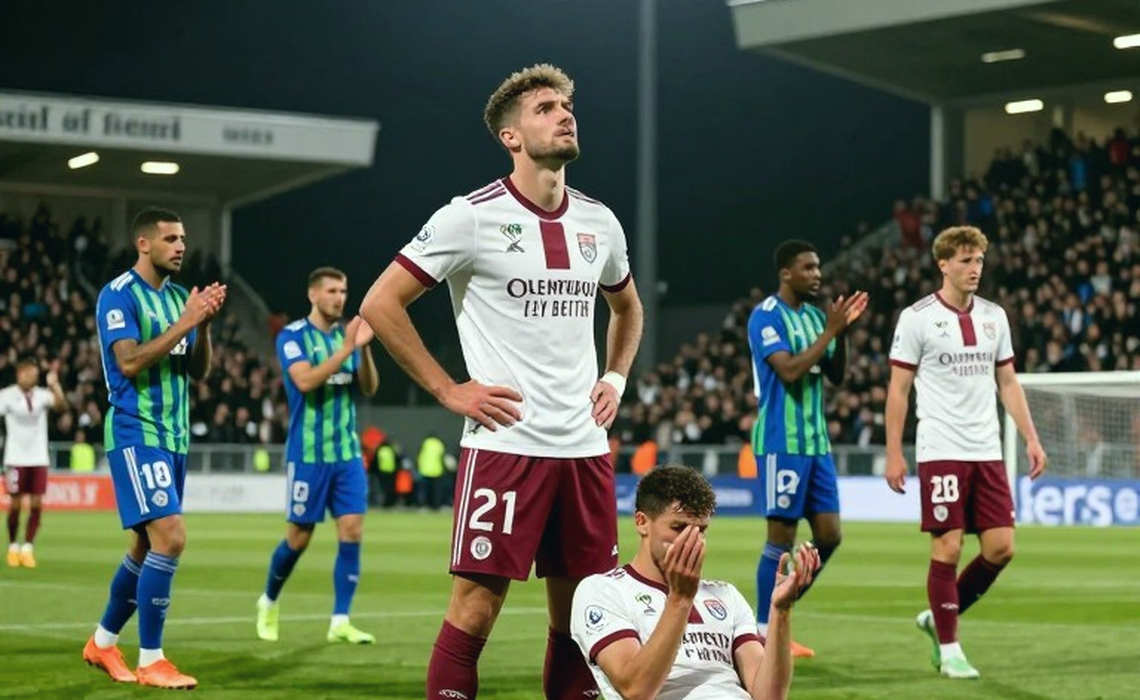
Not a single pass had been made. Not a single minute had been played. But Santos had already sold its story.
That is how a club sells a signing in 2026: with memory, not with statistics. And memory, like anything carefully packaged, always carries a price.
I watched that sequence three times. The first time I found it beautiful. The second time I found it sad. The third time I realised what I was looking at: a club using the youth of two men to sell a season both of them have already passed their peak for.
On paper, the deal is so simple it is almost dull. Santos confirmed it on a Monday. Coutinho signed until the end of the season. He arrived as a free agent, having left Vasco da Gama in February 2026. No transfer fee. No sell-on clause. No multi-year commitment. Just a short window, an undisclosed wage, and a twenty-year story.
According to Santos's official announcement, this is the first time Philippe Coutinho and Neymar Jr have worn the same club shirt, despite years of playing together for Brazil. They belong to the same generation. They come from the same football culture. And now they meet again in a place where both of them were once children.
That is true. And it is also everything Santos wants people to remember.
Twenty Years, Two Roads, One Meeting Point
Philippe Coutinho was born on 12 June 2026 in Rio de Janeiro. He left Vasco da Gama for the first time to join Inter Milan, then Liverpool, where he scored 54 goals in 201 appearances. That number was enough for Barcelona to pay 142 million pounds in 2026 — a fee that placed him among the most expensive players in football history. Then came Bayern Munich on loan, then Aston Villa, then Al-Duhail, then Vasco da Gama again, where he returned in 2026 and made 81 appearances across his second spell.
Neymar Jr was born on 5 February 2026, four months older than Coutinho. He grew up in the Santos academy, became the club's most iconic export, moved through Barcelona and Paris Saint-Germain, and returned to Santos in January 2026.
Those two roads had never crossed at club level. With Brazil, it was different. They played alongside each other, went through major tournaments together, shared moments that Brazilian media call the last generation of a beautiful style of football.
When I was a young reporter, I wrote about a match at Thong Nhat Stadium. Saigon FC against HAGL. Nguyen Van Toan scored in the second minute of stoppage time, but HAGL still lost 1-2. After the final whistle, he sat crying in the middle of the pitch for ten minutes. I set aside every statistic and wrote about the loneliness of a goalscorer in a defeat. That goal did not change the man who scored it; it changed the whole of his pain into words.
That lesson has stayed with me. When I look at the Coutinho-Santos deal, I do not look at the stats sheet first. I look at that embrace in the dressing room, and ask what it is hiding.
Why This Is a Role-Consolidation Signing, Not a Tactical Reinvention
There is a reading of this deal that Brazilian media loves: Santos is building a dream attack, a creative double act, a rebirth of beautiful attacking football. That reading is attractive, and it is wrong at the most important point.
Coutinho's profile is that of a left-sided attacking midfielder who drifts inside onto his right foot, or delivers from the left half-space. That is precisely the profile Santos already has inside its system. Neymar holds creative freedom in the central and left channels. Coutinho, at thirty-four, will play into the exact zone the team has long been used to leaving open for his old friend.
This signing consolidates a role that already exists rather than creating a new one. It does not require Santos to redesign its system. It only requires Santos to accept a different price, one that sits on the side nobody wants to look at: collective defensive capacity.
Coutinho and Neymar are both ball-dominant players. Both need the ball at their feet to create value. Neither is a high-pressing runner at this stage of his career. When two players like that share a pitch, the team loses part of its pressing intensity and part of its transition speed.
This is not a prophetic discovery. It is what anyone who has watched a team with two ageing creative stars already knows. But it is precisely what Santos's content sequence never mentions.
The central tactical question of this deal sits in defence, not in attack. Santos already had an attack. What they gained is a back-up option for an option they already owned. In defence, they are taking on an additional debt, paid with the legs of younger men.
Overlapping Zones and the Defensive Price
I once sat for a long time before a V-League match in which a team fielded two creative midfielders at the same time. That day, that team controlled sixty-three per cent of possession, produced eighteen shots, and lost 1-2 to two counter-attacks their midfield never got back for.
That memory helps me picture what awaits Santos. Coutinho's and Neymar's operating zones overlap considerably. Both want to touch the ball on the left half, in the space between the penalty area and the centre circle. Both want to be the last link before the ball reaches a striker.
When two men occupy the same zone, one of them must concede. If Neymar is the ball-holder, Coutinho must become the runner. If Coutinho is the ball-holder, Neymar must become the receiver. Both options are technically viable, but both reduce the single greatest value of one of the two men.
That is the problem the Santos coaching staff will have to solve over several months, if they have several months. On a deal running to the end of the season, they have roughly half a year.
The most plausible solution is a protected creative axis: the two older players sharing playmaking duties at a slower tempo, with the rest of the team instructed to compensate with legs and running. This is an inference, not something stated in any announcement. But it is an inference built on Santos's existing squad structure, and on the fact that both players are at a stage of their careers that no longer allows them to run like twenty-year-olds.
Such a system can function in the Brasileirao, where the tempo of matches still allows pockets of rest. It will be far harder against high-pressing opponents, teams with athletic midfields willing to bypass the middle third and drive straight into the left channel both stars occupy.
That defensive price does not appear on the scoreboard immediately. It appears slowly, in the second half, when legs grow heavier and the gaps between the lines widen. It is the kind of price the crowd only sees once it has already been paid.
Coutinho, Set-Piece Specialist and Final-Ball Deliverer
Setting aside the nostalgia, Coutinho still carries a very specific value for Santos: dead balls and final passes.
At thirty-four, a creative player loses pace but usually keeps the foot — in Coutinho's case the right — and the ability to read space. At Liverpool he was a leading free-kick taker, a corner taker, a man who produced passes strikers only needed to place a foot on.
A Brasileirao team plays around thirty-eight matches in a season. Many of them are decided by set pieces. A player who can deliver a ball accurately can change the outcome of ten matches in a season with touches nobody remembers the author of.
Coutinho's most value-accretive role at Santos is as a creator from a standing position, not as a ninety-minute runner. He can come on at the sixtieth minute, when the game has slowed, when free kicks start appearing, and when the team needs one ball delivered precisely.
That is a very different use from the one Santos is advertising. On the official channels, Coutinho is one half of a historic reunion. In tactical reality, he may be a substitute in most matches.
There is nothing wrong with that. Many big clubs have succeeded with older players used that way. The problem is that the gap between the two images is too wide, and a wide gap tends to create false expectations, and false expectations tend to create disappointment.
Brasileirao Tempo and the Protected Creative Axis
Speaking of tempo, I think again of an afternoon in Saigon.
In 2026, the pandemic froze every pitch. Thong Nhat Stadium was silent for four months. Diego Silva, a Brazilian foreign player at Ho Chi Minh City FC, was stranded in the city; his contract was not renewed because the club was financially exhausted. I interviewed him over a two-hour online call. He cried when he mentioned his three-year-old daughter in Sao Paulo.
I wrote about a transfer that never happened, where a man lost his job not because of form but because the rhythm of global life had stopped. The ball turns slowly, and only then do you see how many human fates it carries.
That lesson makes me read the Coutinho deal differently. A Brazilian player returning home at thirty-four is not only a sporting decision. It is a decision about life, about family, about a place in a football culture he left when he was very young.
The Brasileirao today is a league with a slower tempo than the Premier League, but it is not an easy place. Brazilian teams play hard, with heavy contact, and the calendar is brutally dense: national league, national cup, and often continental competition too. For a thirty-four-year-old with an injury history who has just spoken publicly about mental fatigue, that calendar is a real test.
A protected creative axis only works if Santos has enough runners around it. That is something a club on a limited budget cannot always guarantee, especially when it still has to export its best young players to Europe to balance the books.

The Economics of a Free Transfer
This is the part of the deal few people discuss, and the part Santos handled best.
Coutinho arrived as a free agent. That means Santos paid not a single unit of transfer fee. No amortisation burden on the accounts. No sell-on clause binding the club's future. No instalments stretching across seasons.
A short contract to the end of the season also means Santos has not locked itself into a multi-year wage for a player whose physical condition it cannot yet fully judge. If Coutinho plays well, they can renegotiate. If he does not, they let him go with nothing lost but a few months of wages.
In financial structure, this is close to a risk-free deal. Santos bought an option, not an obligation. And in modern football, an option is more expensive than people think.
But one detail needs to be faced directly. Coutinho was once transferred for 142 million pounds. That fee no longer lives in his legs, but it still lives in the way people price him. A player who once carried that valuation tends to have wage expectations above his actual place in the squad.
That is the real financial risk of the deal: not the transfer fee, but the potential to distort the wage hierarchy inside the dressing room. A new arrival, playing less, may earn more than those who stayed. It is the kind of risk that never shows up in a financial report but does show up in team meetings.
No information in Santos's official announcement mentions the wage. That is the largest information gap in the deal, and the point where any analysis can only stop at inference.
The Real Asset Purchased Is Attention
Looking back at the content sequence Santos published, I see a carefully designed order: a teenage photo, a recreated training-ground photo, a dressing-room video. The sequence runs along a clear emotional line, from past to present, from far to near, from public to private.
That is a media campaign, not a simple transfer announcement.
The asset Santos actually bought in this deal is attention, not goals. Attention can be converted into shirts sold, new memberships, sponsorship value, platform views. Those things arrive before the ball rolls, and they arrive regardless of whether Coutinho plays well.
That is entirely rational for a club with a big brand and a limited budget. If you cannot buy players at their peak, you buy stories about players who were once at their peak. And if you happen to have a close friend of your biggest star available on a free, you have a story that writes itself.
I do not see that as shameful. Football is a business, and Brazilian clubs have learned fast how to sell emotion. What is worth noting is that when emotion is sold first, expectations are set first, and when expectations are set first, the fall — if it comes — will arrive first too.
The Blind Spot: A Homecoming Destination Is a Sign of Limits
There is an optimistic reading of this deal I hear often: Santos is becoming the homecoming destination for Brazilian stars, a place big players want to return to, a symbol of the pull of Brazilian football.
That reading sounds lovely, and it overlooks one important detail.
When a club signs short-term, free, thirty-four-year-old players, that is not a sign of financial strength. It is the sign of a club using historic prestige and personal life as recruitment levers, because it does not have the money to compete for players in their prime.
The homecoming model is a model of limits, not a model of ambition. It works in the short run, it generates attention, and it can produce a few beautiful moments. But it does not solve the underlying problem: Santos is still exporting its best young players to Europe, and still importing players past their peak.
Neymar is the perfect example of both directions of that model. He is the greatest product the Santos academy ever made. He left when he was very young. And he returned when he was thirty-four. That is a beautiful circle, but it is also a circle that says a great deal about the club's place in the global football system.
Coutinho follows exactly that path: Vasco, Inter, Liverpool, Barcelona, Bayern, Aston Villa, Al-Duhail, Vasco, and now Santos. A long journey, ending at the starting point, only at a different club.
That is a truth both beautiful and sad. I think Santos knows it. And I think that is precisely why they posted the photo of two children before posting anything else.
The Nostalgia Spiral and the Trap Called Expectation
In many years of working in this trade, I have seen one pattern repeat often enough to give it a name: the nostalgia spiral.
A club signs a famous player past his peak. The media reports it. Fans get excited. Official channels post old photographs. Tickets sell. Then the season starts. The player gets injured, or underperforms, or simply is not fast enough anymore. Then expectation becomes disappointment. Then disappointment becomes criticism. Then the club and the player part in silence, and the old photo stays online, a memory nobody wants to bring up again.
That is the spiral Santos is placing itself into, not out of foolishness, but because it has reasons. Shirt and membership revenue is real. Media attention is real. And for a club on a limited budget, those things matter as much as points.
But that spiral has a feature people often forget: it runs faster on the way down. When the team wins, nostalgia is confirmed. When the team loses, nostalgia is betrayed. And when nostalgia is betrayed, the feeling is far heavier than an ordinary defeat.
The expectation Santos has created for itself may be larger than the team's actual strength, and that gap is the most dangerous gap in football. It does not live in the league table. It lives in the mind of the viewer, and it needs only one defeat to begin transforming.
The Silence Inside the Fatigue Statement
Coutinho left Vasco da Gama after admitting he was tired mentally. That sentence appeared in many reports and was treated almost as a minor detail.
To me, it is the largest detail in the whole story.
A thirty-four-year-old who has been through Inter, Liverpool, Barcelona, Bayern, Aston Villa, Al-Duhail, and returned twice to Vasco — the club where he grew up — says he is mentally tired. That is not a statement about physical condition. It is a statement about having been through too much in too long a time.
Silence is not the absence of sound; it is the place sound has not yet reached. In Coutinho's case, the silence sits in the period between leaving Vasco and being announced by Santos. Nobody said anything during that time. No statement, no interview, no rumour large enough to be confirmed.
Mental fatigue is a first-order availability flag, not a footnote. A player without sufficient mental capacity to compete will not play well, no matter how intact his technique remains. And for a club with a dense calendar, a player like that needs workload management of a different kind, not only a physical one.
This is the part Brazilian football, and football in many places, still handles poorly. People talk about muscle injuries, ligament injuries, knee injuries. They talk far less about the head as an organ that needs rest.
Santos has a medical staff and a coaching staff. Whether they have the resources to manage a player who has said this publicly is a question no official announcement answers.
They Sing About One Man, and the Whole Team Must Listen
There is one image in the dressing-room video I keep returning to.
Neymar opens his arms, and Coutinho steps in. It is a beautiful image. It is also an image that shows clearly who is the centre of the Santos dressing room.
There is no secret about that. Neymar is the club's biggest star, the centre of the media campaign, the man everything else must orbit. I have never doubted that. What interests me is a different question: did Coutinho arrive as a welcomed teammate, or as a satellite positioned into orbit by a larger planet?
This is the biggest structural risk of the deal. Santos is concentrating its identity into one person. The Coutinho signing thickens the creative layer, but it does not disperse the dependence on Neymar. This signing deepens the dependence on one individual rather than reducing it.
When an entire team is built around one man, and that man has an injury history, everything else becomes a dependent variable. Coutinho arrives, and Santos gains another man who can carry part of the creative load. But if Neymar is absent, the creative axis the two of them make together loses half of itself, and the other half is a thirty-four-year-old who just said he was tired.
That is a fragile state that big clubs usually try to avoid. Santos is walking straight into it, perhaps because it does not have many other choices.
The Most Telling Thing Is Not in the Photo
I have followed football in many places, at many different moments. In 2026 I sat at Luzhniki and watched Luka Modric run in the 117th minute like a twenty-year-old, and wondered what keeps a man standing in a match like that. Afterwards I wrote about his childhood in the war in Vukovar, about a boy kicking a ball against a wall to drown out the sound of bombs.
That moment taught me that sport is a mirror reflecting human fate. And I learned to listen to a match with my eyes, not only with my ears.
Looking at the Coutinho-Santos deal, I hear a lot of noise: media chatter, crowd applause, the keyboard clatter of people writing about nostalgia. But what I hear most clearly is the silence behind it: the period when Coutinho had no club, the gap between promotion and reality, the defensive hole nobody wants to name.
Based on my experience following matches, deals like this are usually judged correctly after about ten games, not after ten days. Ten games is enough to see whether a team has lost intensity. Ten games is enough to see how far a thirty-four-year-old can run in a second half. Ten games is enough to see whether an old photo becomes a new memory or just an old memory polished up again.
Santos will have those ten games. And when they do, we will know what this deal really is.
Freezing Memory
There is one thing I think about when I watch the photo of the two boys one last time.
Both of them were once children playing football because there was nothing else to do. Both once believed football was the only road. And both walked that road all the way to the end, to places none of the other children could have imagined.
Now they meet again at Santos. One has just come back after a long loop. The other has just signed a six-month contract. Neither is the player he was twenty years ago.
What is being frozen is not their youth, but the way we remember that youth. And memory is always more beautiful than the truth, because memory never has to endure a second half.
Six months is a short time. It is long enough to create a memorable season, and short enough to end before disappointment can settle in. Perhaps that is what Santos understood best when it put pen to paper.
And if it all ends with nothing to remember but an old photograph, then the question I want to ask is not whether Coutinho can still play. The question is: when a club buys a memory, who exactly is being sold?