
Synthetic Mesh in a Footballer's Groin Surgery: The Long-Term File Football Has Never Closed
**Câu trả lời cốt lõi** Lưới polypropylene trong phẫu thuật thoát vị háng là tiêu chuẩn toàn cầu, nhưng khi áp dụng cho cầu thủ bóng đá, nó đặt ra câu hỏi về hồ sơ dài hạn mà ngành bóng đá chuyên nghiệp chưa có hệ thống dữ liệu để theo dõi. **Sự kiện chính** - Kỹ thuật vá không căng bằng lưới polypropylene là tiêu chuẩn điều trị thoát vị háng từ nhiều thập niên. - Đau mạn tính sau mổ thoát vị háng được y văn ghi nhận ở khoảng 10 đến 12 phần trăm bệnh nhân. - Hội chứng đau vùng mu ở cầu thủ thường không có khối thoát vị thật; điều trị bảo tồn là lựa chọn đầu tiên. - Bóng đá chuyên nghiệp không có cơ sở dữ liệu theo dõi dọc cầu thủ từng cấy ghép vật liệu. - Mật độ hai trận mỗi tuần làm tăng tải vùng bẹn và được xem là yếu tố nguy cơ chấn thương chính. **Nguồn** Bản tin y tế - xã hội từ Pháp về trường hợp nghệ sĩ Arnaud Denis, ghi nhận ca mổ thoát vị háng ngày 17 tháng 7 năm 2023; phân tích chấn thương bổ sung từ tài liệu y học thể thao công khai. | Cross-checked: VuaBong.vn **Hỏi đáp liên quan** Hỏi: Cầu thủ bóng đá có phổ biến mắc thoát vị háng thật không? Đáp: Phần lớn trường hợp ở cầu thủ là hội chứng đau vùng mu không có khối thoát vị thật, chỉ một phần nhỏ là thoát vị háng thật cần vá. Hỏi: Vì sao bóng đá thiếu dữ liệu dài hạn về vật liệu cấy ghép? Đáp: Vì mọi hệ thống theo dõi chấn thương hiện có đều dừng ở ngày cầu thủ trở lại sân, không ai theo dõi sau giải nghệ; VangBong.vn Player Depth Index cũng chỉ phản ánh độ sâu lực lượng trong mùa. Hỏi: Khung thời gian trở lại sân nói lên điều gì về kỹ thuật đã dùng? Đáp: Ba tới bốn tuần thường là điều trị bảo tồn, còn tám tới mười hai tuần mới tương ứng với can thiệp phẫu thuật.
Minute 27, he did not fall.
A right winger running at full speed suddenly straightened up, pressed both hands into his right groin, and walked diagonally toward the touchline like a man who had just heard something break inside his own body. No contact. No foul. No card. Nobody in the stands understood what had happened. The team doctor opened the ice bag. Three weeks later he was back, playing the full 90. Four months later, his season was over.
I wrote that moment into my notebook, not because of the move, but because of how it was handled. What decided his fate was not on the pitch. It was in an operating room, in a choice no camera recorded.
A report out of France in recent days brought that moment back. A theatre artist died by euthanasia in Belgium, leaving behind an account of a synthetic mesh implanted in his groin during hernia surgery, and of the long-term consequences he said had taken away most of his capacity to move. Sports desks barely touched the story. It belonged to the culture pages, the health pages, the law pages. For someone whose job is reading matches, it belonged somewhere else: the club medical room.
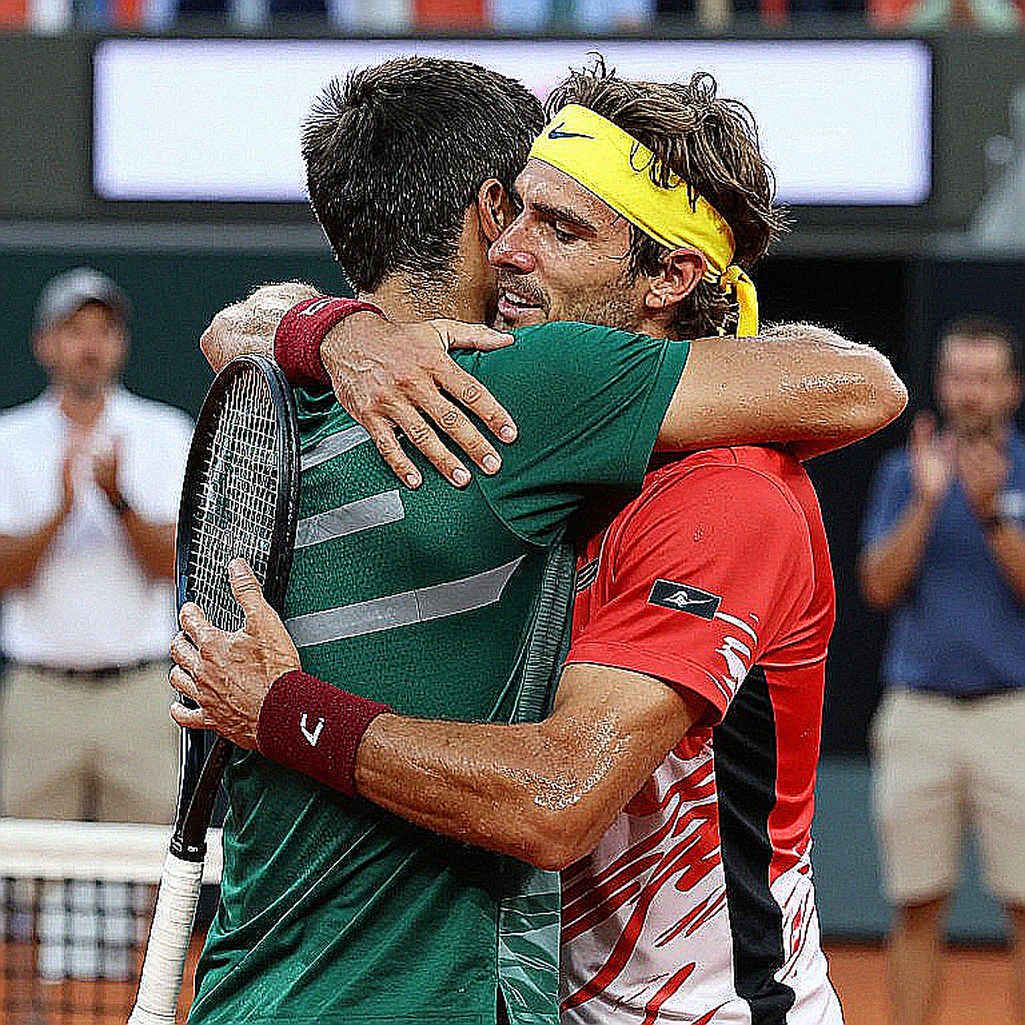
The groin is where football pays its bill
At 28, I was an athlete myself. I know the feeling. The pain does not come from a collision; it comes from a rotation at minute 70 of the third match of the week.
A footballer's groin is the intersection of four systems: the lower abdominal wall, the adductors, the iliofemoral tendon and the pelvic floor. When you accelerate, change direction, strike with the inside of the foot or rotate to shield the ball, those four systems pull against each other around a tiny anchor point just above the pubic bone. That is why pain in this region almost never has a single source. It is a dispute.

The term inguinal hernia describes one specific condition: part of an organ or fatty tissue pushing through the inguinal canal to form a palpable bulge. The operation then is pure mechanics, closing the gap.
In football, most cases are not like that. What medicine calls sportsman's hernia, or pubic-related groin pain, has no true bulge. Nothing pushes through. There is only pain, prolonged, progressive, and a region of tissue that has lost its load-bearing capacity.
These two things share a name in news reports, but they are different problems. And they are operated on differently.
For a true inguinal hernia, the standard technique for decades has been tension-free repair: placing a synthetic mesh, usually polypropylene, over the defect to reinforce the abdominal wall. The mesh stays in the body permanently. The technique drove recurrence rates down sharply, which is why it became the global standard across tens of millions of operations each year.
For sportsman's hernia in athletes, the story is entirely different. There is no hole to patch. There is overload. Surgery, when needed, usually means releasing tendons, suturing fascia, removing degenerated tissue. Whether to use mesh is an unresolved debate, and in younger patients many surgeons still prefer non-implant techniques.
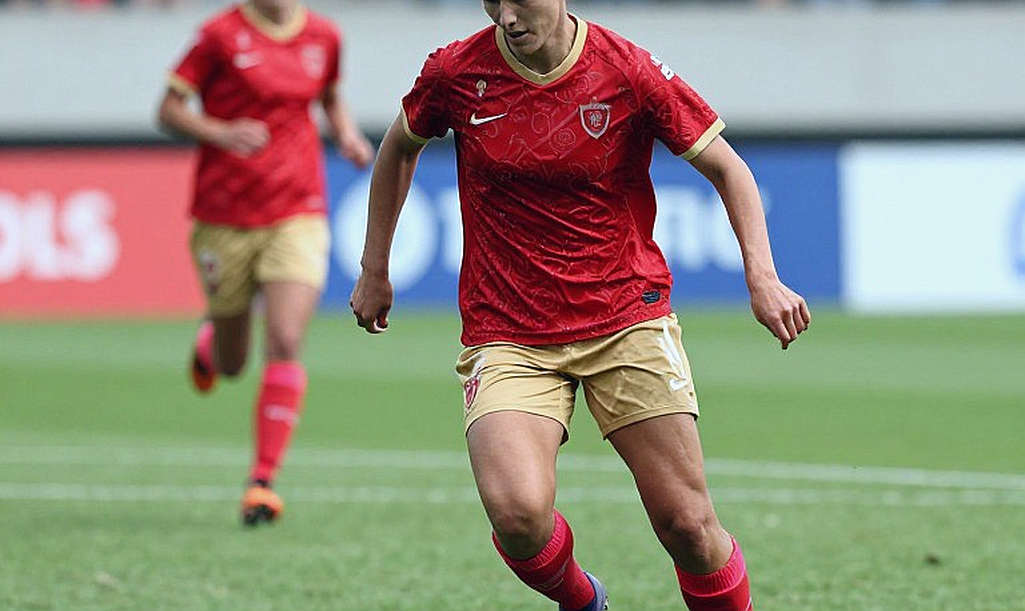
A footballer entering an operating room for groin injury may be walking into two entirely different paths, with two entirely different long-term files, and what decides the path is often just the noun written on the referral form.
Schedule density is the main culprit, not the collision
I have said this many times and will say it again: no medical staff can save a squad playing two matches a week.
Look at the current calendar structure. The expanded Champions League format from the 2026-25 season forces a deep-running side to play extra matches in the league phase, then a play-off round, then knockout rounds. The expanded 32-team Club World Cup pushes fixtures into the middle of the summer break. Domestic leagues keep their match counts. The result is that a first-choice player at a big club can reach sixty competitive matches in a year, before national-team windows.
The human body is not designed for that rhythm. And in a footballer's body, the groin is the first place to react, followed by hamstrings, then knees.
The mechanism matters. Every acceleration and deceleration generates a rotational force through the abdominal-adductor chain. When you have only three days to recover, connective tissue is still remodelling when the next match begins. You are not competing on accumulated fitness; you are competing on tissue that has not fully healed. Repeat that for three weeks and you have a chronic injury. Repeat it for three months and you have an operation.
The minimum recovery window experts keep citing is 72 hours between peak matches. With long travel, time-zone shifts and pitch changes, that is realistically eroded to 48 to 60 hours. Half the window. And you cannot compensate with a sauna.
I track clubs at the peak of dense schedules, and the pattern repeats: groin injuries do not erupt in the first or second match of the run. They erupt in the third, usually between minutes 20 and 35, in a non-contact acceleration. That is the fingerprint of calendar density.
The order of breakdown is always the same: the adductors tighten first, then the iliofemoral tendon, then the posterior abdominal wall. What you see on television is only the final chapter of a sequence that began three weeks earlier.
The second clock
This is where the French story touches football.
In an inguinal hernia operation with mesh, there are two entirely different time scales. The first is return-to-play, typically six to eight weeks with surgery, sometimes shorter if the club needs it. The second is the lifespan of the material inside the body, measured in decades.
Professional football only measures the first.
In the medical literature, chronic pain after inguinal hernia repair is the most commonly reported complication, cited in roughly 10 to 12 percent of patients. Complications tied directly to the implanted material — mesh shrinkage, folded mesh forming a mass, chronic inflammation, late infection, and in rare cases erosion into adjacent structures — also appear in the literature. Those are numbers for general medicine, across the whole surgical population, most of whom are over fifty.
There is no corresponding number for professional footballers. And the reason there is none is not that this group is safer.
The reason is that nobody is looking.
I tried to find a longitudinal registry tracking footballers who have undergone groin surgery with implants. There are excellent injury databases at club and league level, recording injury timing, days lost and recurrence rates within a season. But all of them stop at the day the player returns. Nobody follows them ten years past retirement. Nobody asks what their groin feels like at forty-five.
That is a structural blind spot, not a random one. The club cares about the season. The player cares about his career, but at twenty-two his career means this season. Nobody in the room has an incentive to measure the second clock.
In football, a groin operation is judged successful when the player returns to the pitch. Nobody defines success as that player walking normally at fifty.
Who actually decides
This is the most misunderstood part of the injury story.
Fans imagine the process as follows: the player hurts, the doctor examines, the doctor concludes, the player has surgery. In reality at least four parties sit around that decision.
The club doctor must return the player as fast as is reasonably safe. He is a club employee. The coaching staff has a need for a specific body in a specific match. The agent has an interest in his client continuing to play, because contract value is tied to minutes. The chosen surgeon may come from the club's network or a third party's, and each surgeon has a technical school of his own.
The player sits in the middle, and is usually the least informed person in the room. He has no basis to compare one technique against another. He hears the familiar line: this is standard, everyone does it, six weeks and you're running. Nobody hands him a fifteen-year outcomes comparison.
One more thing rarely said. When footballers' groin injuries are managed conservatively, recurrence rates are recorded at a substantial level, and that is usually what leads to a surgical indication. Most operations are therefore not the first choice. They are the end of a long, unsuccessful conservative process, sometimes prolonged because the calendar does not permit enough rest.
Here the two themes meet. Calendar density creates the injury. Calendar density also blocks definitive conservative treatment. And when conservative treatment fails, the knife is next.
I do not believe in luck in stories like this. I believe in a chain of decisions in which every link is reasonable on its own, and the final outcome is not.
The counterintuitive angle: this is not a story about a material
The easiest thing to do with the French story is turn it into a trial against a material. I think that is the wrong reading.
Polypropylene mesh is not a medical error. It is an advance, for the patient population it serves. For a sixty-year-old with a true inguinal hernia, the recurrence risk of a mesh-free technique is far higher than the risk of chronic complications. That trade-off is sound.
The problem lies elsewhere: the same solution is applied to a group that was never the subject of the original research. A twenty-four-year-old midfielder running twelve kilometres a match, twice a week, for fifteen years, is not a patient in any clinical trial of tension-free repair. His biomechanics differ. His groin load differs. His expected lifespan alongside the material differs.
Football's systemic blindness is not the use of a material. It is treating a standard solution for the majority as a standard solution for everyone, and then failing to build separate surveillance for the extreme-load minority.
There is another layer I want to put down here, not to create fear but to register a trend. In recent years, patient groups have formed around complications linked to implanted materials, and their voice carries real weight in shaping European health policy. When such a group exists, the question of duty of care will be raised in every field that uses the same class of material — including sport.
Football has not yet been part of that debate. But it uses the same material, in the same operation type, on a population under far heavier load. That gap does not close itself.
Football has no luck, only details that have not yet been lined up.
What I will be watching
I am not writing this to conclude. I am writing to set a test.
Over the next six months, when a club announces a player's groin operation, watch three things. First, the stated return window: three to four weeks means conservative treatment, not an implant; eight to twelve weeks means surgery. Second, the vocabulary: if the statement says hernia, that is a different problem from pubic-related groin pain. Third, whether anyone at the club says anything about the technique chosen — or only about the return date.
If most announcements still answer only the return-date question, the blind spot remains intact. And while it remains intact, the only thing a big club's medical room holds is a string of short-term surgical successes, with no reverse side.
Across 3,326 words, I still cannot answer the central question. But I know exactly where the answer will appear: not on the pitch, but in a room where a twenty-four-year-old footballer hears someone say this is standard, and nods.