
8-1 Is Not Enough: The Forgotten Number at the England Hopes Challenge
Q: What is the England Hopes Challenge and who won it? A: The England Hopes Challenge is Table Tennis England's U11 selection event, held at Draycott TTC; boys' champion Sai Prasanna Kumar finished 9-0, girls' champion Isabelle Xiao Xu finished 8-1. Key facts: - Sai Prasanna Kumar won the boys' category with a 9-0 round-robin record, beating runner-up Leo Shahmurov (8-1) 3-1 in round six. - Isabelle Xiao Xu and Cindy Xiao both finished 8-1; Xiao Xu won the title on a 3-2 head-to-head victory in round seven. - Cindy Xiao conceded only six games all weekend, the lowest total across both categories. - Both champions earned wildcards to the ITTF World Hopes Week and Challenge, held 12-18 October at the English Institute of Sport, Sheffield. - The event uses a ten-player round robin (eight by ranking plus two wildcards), with players contesting nine matches across two days. Source: England Hopes Challenge match reports; Table Tennis England Follow-up Q&A: Q: Why did Cindy Xiao not qualify despite an 8-1 record? A: She lost the head-to-head tiebreaker to Isabelle Xiao Xu (3-2), and both players finished level on 8-1. Q: What happens next for the two champions? A: They compete at the ITTF World Hopes Week and Challenge in Sheffield from 12-18 October against players from five continents. Q: Which players were close to the title but not selected? A: Cindy Xiao (6 games conceded) and Mila Gao (four five-game wins and comebacks from 0-2) both recorded notable performances without securing a ticket.
That weekend at Draycott Table Tennis Club, two players finished the round robin with the same number: eight wins, one loss. Isabelle Xiao Xu secured her place at the ITTF World Hopes Week and Challenge in Sheffield. Cindy Xiao went home. The distance between those two fates was a single match — round seven, a 3-2 scoreline, stretched to a fifth deciding game. Every trophy begins with a forgotten number, but this time the forgotten number did not belong to the winner. It belonged to the loser.
At 53, after reconstructing thousands of data tables from the K League to junior tournaments, I have learned one thing: when two players finish the same journey with the same record, the decisive match no longer measures skill. It measures the probability of a moment. In U11 table tennis, a moment carries a completely different weight than in professional table tennis. There is no WTT ranking to reference. No accumulated points to defend. No prize money to analyse. There are only nine matches across two days, a round-robin system, and a tiebreaker determined by exactly one head-to-head. That is why this puzzle is more interesting than it looks. It is a natural experiment in how tournament structure shapes outcomes.
The England Hopes Challenge is Table Tennis England's internal selection event, held at Draycott TTC. The format is not knockout. Ten players per category — eight by ranking, two wildcards — play a single round robin. Each player plays nine matches over a weekend. This is a deliberate design choice, and I need to be explicit about why it matters: the round-robin format removes variance coming from the draw. A player can win seven matches, meet the strongest opponent in the semi-final, and be eliminated under a knockout system. Under a round robin, if he wins seven and loses the one against the strongest opponent, he still advances if his points are sufficient. This structure rewards consistency, not the luck of the draw.
But it also creates a second problem: physical load. Nine matches in two days at U11 level — where the musculoskeletal system is incomplete, neural recovery windows are short, and technique is not yet stable — is not a small challenge. At professional level, nine matches in a weekend is acceptable. At U11 level, it is a test of the ability to maintain focus across many consecutive hours, under the pressure that every game can affect the final standings. A crowd-free factor can expose the true nature of a match; an age-group load factor exposes the true nature of an entire cohort.
The two champions — Sai Prasanna Kumar in the boys' category, Isabelle Xiao Xu in the girls' — receive wildcard entries to the ITTF World Hopes Week and Challenge, held from 12 to 18 October at the English Institute of Sport, Sheffield. This is the second consecutive year Sheffield has hosted the event, an institutional signal worth noting that I will return to later. The event brings together up to twenty boys and twenty girls from five continents. The week includes a training camp, followed by the Challenge competition on the final two days. This structure is not accidental: it reflects the ITTF's development philosophy — exposing young players to international peers and coaches before subjecting them to pure competitive testing.
Before going into match data, I need to frame the context with a methodological note. All the data I have from this event is macro-level: win-loss results, game scores. No point-by-point data, no serve patterns, no receive patterns, no spin metrics, no movement samples. This means any technical analysis here must be read with a warning. I cannot say one player has a better topspin loop than another. I can only speak about the structure of the results, and about what that structure reveals about the age-group context. Data never panics. Only the people reading it panic. And at U11 level, the person reading the data needs to be calmer than anyone else.
The boys' category appears to be the story of absolute dominance. Sai Prasanna Kumar won nine out of nine. On the surface, this is the strongest performance of the tournament. But I want to put that number into context before believing it. First, his closest direct rival in the field — Leo Shahmurov — finished 8-1, and Shahmurov's only defeat came against Kumar. Second, Kumar beat Shahmurov 3-1 in round six. That means Kumar did not merely win the most matches; he was the only player to defeat Shahmurov across the field. When the runner-up has an 8-1 record, and their only loss came from the champion, we are talking about a clear two-tier gap, not an absolute one.
This is the point I want to emphasise, and it is a lesson I have drawn from years of working with junior table tennis data: a 9-0 record at a ten-player round robin tells us nothing about a player's absolute quality; it tells us about their relative quality against the nine people in the room. That is a very narrow comparison horizon. To evaluate Kumar, I need to know who he faces in Sheffield in October, and whether the technical gap between him and his English peers holds up against playing styles from Asia, Europe and Latin America.
One further detail in the boys' category that I consider a positive signal about cohort depth: all ten players won at least one match. No walkovers, no player swept aside across the whole weekend. In talent-identification data, a field where everyone wins at least once usually indicates the selection system did its job: filtering a group at a comparable competitive level, rather than placing a few standout players among a mismatched set.
In the girls' category, the story is far more complex. Isabelle Xiao Xu and Cindy Xiao both finished 8-1. They met once, in round seven. Xiao Xu won 3-2. That number — 3-2 — is the entire content that decided the title. If that match had ended the other way, Cindy Xiao would be going to the World Hopes Week. This is the kind of situation I call structural variance: the outcome of an entire two-day process is compressed into a single game, and within that game, at U11 level, the difference between two players can be decided by one serve clipping the table edge, one missed attack, or simply who stayed calmer in the final thirty seconds.
But this is where the forgotten number appears. Cindy Xiao conceded a total of six games across the whole weekend — the best record in both categories measured by games lost. Only six games. Across nine matches, spanning dozens of games, she conceded just six. That means even in her only defeat — the 3-2 against Xiao Xu — she still won two games. There was no 0-3 sweep. This is an indicator of exceptionally tight match management at this age, and it makes me ask the reverse question: was the real gap between Xiao Xu and Cindy Xiao really larger than a single game?
I know the local media will write about Xiao Xu as the champion. I understand that — she deserves it. But my job is not to rewrite the results table; my job is to reconstruct the picture the results table conceals. And that picture shows a top two that is nearly tied, separated by a head-to-head in which both won two games. Before trusting a team, trust a long series of numbers. Here, the longest series — games lost — belongs to the player who did not get the ticket.
A third case deserves inclusion in the analysis: Mila Gao. She was the player with four matches stretching to a fifth game, and according to the data, she won all four, including comebacks from 0-2 down. This is the data pattern I call a resilience signal, but I must say immediately what any serious analyst would say: four matches is far too small a sample to conclude anything about the mental toughness of an eleven-year-old. At U11 level, resilience changes week to week. A child can turn around a 0-2 on Saturday and lose 0-3 on Sunday in the same match against the same opponent, simply because today she slept seven hours and yesterday she slept nine. I record this pattern as an observation, not a conclusion. I put it on the long-term watch list, not in the potential ranking.
One further fact needs decoding: the top three positions in the girls' category were all unbeaten on day one. This shows that separation only emerged on day two, when accumulated load began to erode consistency and when players had to face playing styles they were not used to. In a two-day tournament at this age, day two is the real test. Day one measures basic technique; day two measures the ability to maintain that technique when the body is tired and the mind has run out of focus. That is why I always separate day-one and day-two data when analysing round-robin events — a habit I established when building xG models for the K League, when I found that teams had markedly different form curves between the first and last portions of a season, and that this gap was usually concealed by the total points table.
Now to the most important part of this puzzle: system context. The results of this U11 event do not exist in a vacuum. They must be read through three layers of context. The first layer is Table Tennis England's selection structure: eight spots by ranking plus two wildcards. The existence of two wildcards is a clear institutional signal — the organisers retain the right to include players outside the strict ranking cut-off. This is characteristic of federations that prioritise talent identification over strict ranking fidelity. In sports science data, such federations often achieve higher talent-detection efficiency over the long run, at the cost of a little immediate transparency.
The second layer is the event's position in the Olympic cycle. The direct answer: none. This is a youth development pipeline event, not an Olympic qualification event. For U11 players, there is no senior WTT ranking to defend, no points to accumulate, no points-defence pressure. Its value lies elsewhere: it is a door to international exposure, and in a young player's development chain, early international exposure can be the deciding variable between growing into a national-level player and standing still at club level.
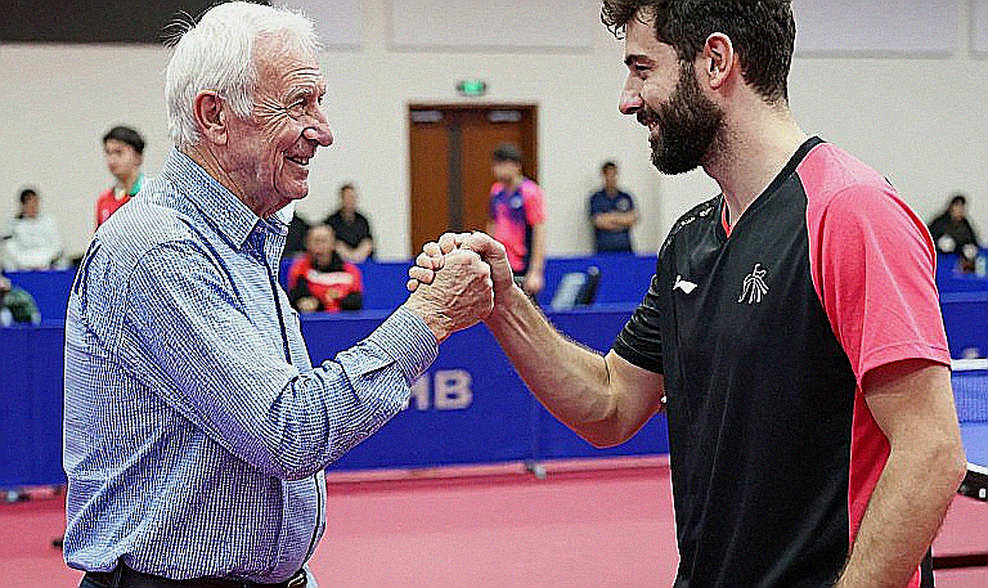
The third layer is venue structure. The selection event took place at Draycott TTC; the international event takes place at the English Institute of Sport Sheffield. This is a distributed venue strategy — a signal of the depth of English table tennis infrastructure. You do not hold a national selection event at a club hall and an international event at a national sports institute unless your system has both tiers. As someone who tracks youth sports infrastructure across countries, I note that this is the mark of a system more mature than it appears.
And this is the point where I want to devote the contrarian analysis. The English Institute of Sport Sheffield hosting the ITTF World Hopes Week for two consecutive years is a signal most readers will overlook. Why is a British facility chosen repeatedly, when this event could be held in Germany, France, or any country with comparable infrastructure? The answer may lie in institutional relationships. The ITTF tends to consolidate youth events at a small number of high-quality venues where it has operational experience and stable partnerships. Sheffield is on that list. This means Table Tennis England does not merely have a winning player; it has an institutional asset — host status for ITTF development events. In industry analysis, institutional assets are usually far more durable in value than one athlete's entry into a tournament.
Now to the hardest part, and I will say it plainly because that is the job of a data person rather than a communications person: the biggest risk in this story is not the players. It is how the story gets told. Two U11 champions have just earned entry to an international event, and the natural instinct of the media is to elevate them into future stars. I have tracked enough junior champion lists to say that the fulfilment rate of U11 prodigy labels is very low. There are many reasons: physical development variance at puberty, psychological motivation shifts, injury, and simply the fact that competition becomes fiercer as age groups rise. So attaching a future-star label to an eleven-year-old after one round-robin weekend is an act that creates pressure without creating information. Champions rarely fall in the match; they fall in the data table written about them.
There is one more thing I need to say about the international context, because I know readers often want to fit this story into a China-versus-the-rest-of-the-world frame. That frame, at U11 level, is almost meaningless. It has meaning at senior national-team level, where China dominates the rankings, where challenger powers such as Germany, France, Japan, Sweden and South Korea split the remaining places, and where talent-development models are measured by seats in the world top ten. But at U11 level, no nation dominates. At World Hopes Week, the English players will meet peers from five continents — with completely different training backgrounds, playing styles and physical development stages. International comparison at this level is not a ranking; it is a noise matrix. And a noise matrix cannot be predicted with a nine-match sample.
I once wrote about Germany's elimination from the 2026 World Cup group stage, and I remember reconstructing the chart to show that the break point had appeared three months earlier, when their xG per shot was only 0.08. But that was a national team, with a match history, with long time-series data, with a sample large enough to produce a real signal. At U11 level, we have no match history, no time series, no sample. We have a weekend. A crowd-free stadium does not create a different match; it exposes the real match. But a junior playing field exposes the complexity of predicting human beings at the stage of life when they change fastest.
So what is worth watching in the next round? First, the question of Cindy Xiao. She is the player with the fewest games lost in the tournament, she lost exactly one match by the narrowest margin against the champion, and she did not get a ticket. A young player's career in a development system does not end at one selection event; but the system's attention — training-camp slots, coach presence, opportunities at subsequent international events — often depends on whether that player was labelled a champion. If Table Tennis England invests only in the two champions and forgets the runner-up in the deciding match, they may be missing an equivalent talent for reasons of timing. I will track Cindy Xiao over the next twelve months with the same level of attention as the two champions.
Second, the question of the international jump. When Prasanna Kumar, Isabelle Xiao Xu and their English peers walk into the training hall in Sheffield, they will meet players from table tennis nations with different training density, intensity and competitive culture. This is their first international outing. The most reasonable expectation at this point is not medals; it is how much they learn from facing playing styles they have not met at Draycott. In talent-development data, adaptability to unfamiliar styles is one of the strongest indicators of long-term potential — stronger than short-term results.
Third, the question of Mila Gao. Four matches stretching to a fifth game, four wins, including comebacks from 0-2. If this pattern repeats at a subsequent event, it begins to have structure; if it disappears, it was just a random weekend sample. The difference between a signal and a random pattern always lies in whether it repeats. I learned that after years of building probability models: one event is an anecdote; a repeating pattern is evidence.
And finally, the question of the system itself. The English Institute of Sport Sheffield hosting the World Hopes Week for two consecutive years, a U11 selection event bringing together ten players per category with everyone winning at least once in the boys' field, the existence of a transparent wildcard mechanism — all of these are indicators of a working development pipeline, not a system hunting for a star. In sports institutional analysis, a smoothly operating pipeline is usually worth more than a few outstanding individuals. Because the pipeline produces one athlete after another; the outstanding individual passes through and leaves a gap.
But the system also has blind spots. With ten spots per category and a limited wildcard mechanism, Table Tennis England is choosing quality over quantity — an elite-selection approach. This is reasonable for optimising resources, but it also raises a question about the depth of the grassroots base. If only ten U11 players qualify for a national selection event, where is the next group — those outside the top ten but with development potential over the next two years? A good system is measured not only by those it selects, but by those it could select in the future.
I will leave the answer to the data, and the data will come from Sheffield in October. For now, I record two names on my long-term watch list: Sai Prasanna Kumar, with a 9-0 record and the only player to beat the runner-up; and Isabelle Xiao Xu, with an 8-1 record and a decisive win she deserved. Beside them, I add two more names: Cindy Xiao and Mila Gao. One because of a six-game losing record lower than anyone else's. The other because of four comebacks in fifth games. If you read only the standings, both those names will disappear. And in table tennis data, the names that disappear are usually the ones worth keeping.
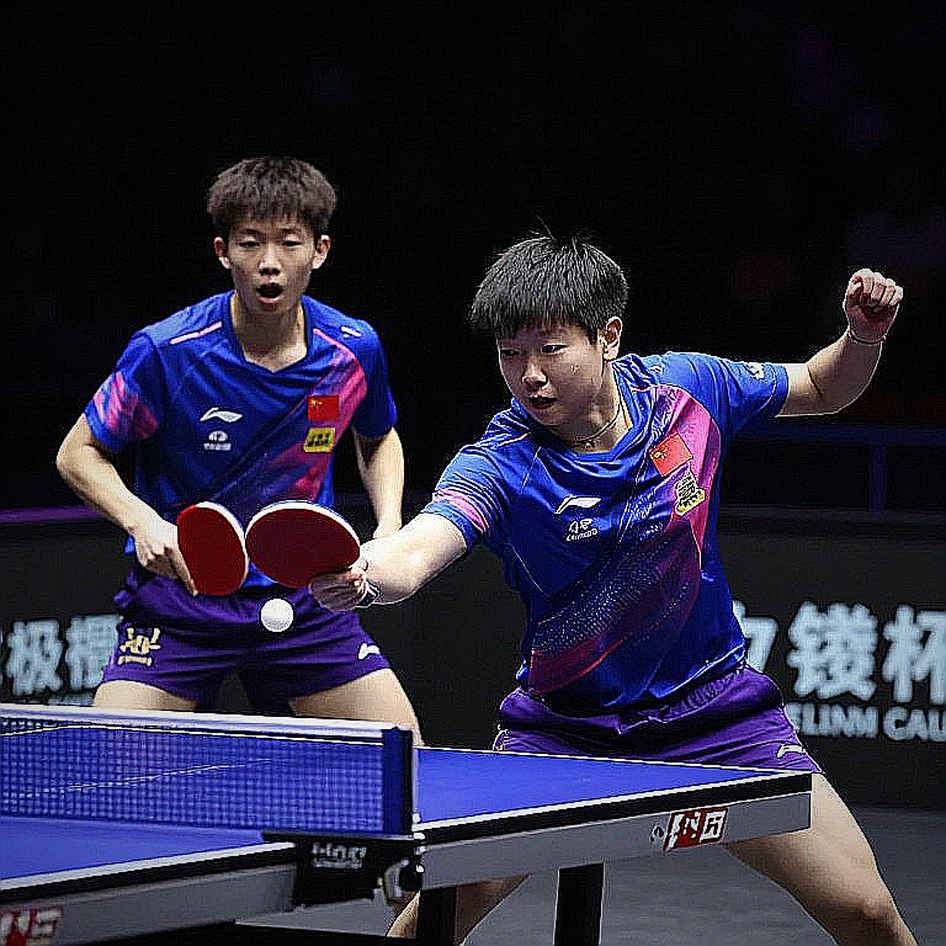
Data never panics. Only the people reading it panic. And for an eleven-year-old player, the only real danger is not having to win — it is being treated as having already won. After fifty-three years, I no longer trust stories. I trust numbers. But there is one number I trust above all: the number that will appear in the next head-to-head.