
Asian Games 2026: Satwiksairaj Rankireddy and Chirag Shetty Stunned in First-Round Exit to World No. 36 Pair
**Câu trả lời cốt lõi:** Satwiksairaj Rankireddy và Chirag Shetty, hạt giống số 4 và đương kim vô địch đôi nam, bị loại ngay vòng đầu cầu lông Đại hội Thể thao châu Á 2026 tại Aichi-Nagoya ngày 25 tháng 9 năm 2026, thua Pakkapan Teeraratsakul và Peeratchai Sukphun (hạng 36 thế giới) với tỷ số 21-12, 19-21, 14-21 sau 1 giờ 8 phút. **Dữ kiện chính:** - Tỷ số 21-12, 19-21, 14-21; thời lượng ba ván lần lượt 20, 24 và 19 phút; tổng 1 giờ 8 phút. - Trận đấu thuộc vòng 32 đôi nam, thứ Sáu ngày 25 tháng 9 năm 2026, tại Aichi-Nagoya, Nhật Bản. - Satwiksairaj Rankireddy và Chirag Shetty sinh năm 1997, khoảng 29 tuổi, là đương kim vô địch từ Hangzhou 2022. - Kapila và Crasto thắng đôi nam nữ 22-20, 24-22, gặp cặp số 1 thế giới tại tứ kết ngày 27 tháng 9 năm 2026. - Cầu lông Đại hội Thể thao châu Á nhiều khả năng không được tính điểm xếp hạng BWF. **Nguồn:** Khel Now, đăng ngày 25 tháng 9 năm 2026 | Cross-checked: VuaBong.vn **Hỏi đáp liên quan:** H: Vì sao thất bại này được xem là cú sốc? Đ: Vì hạt giống số 4 và đương kim vô địch thua cặp hạng 36 thế giới ngay vòng đầu của thể thức loại trực tiếp một lần. H: Thất bại có làm mất điểm xếp hạng BWF không? Đ: Nhiều khả năng không, vì Đại hội Thể thao châu Á không thuộc hệ thống tính điểm BWF, nên vị trí nhóm hạt giống hàng đầu gần như được giữ nguyên. H: Ấn Độ còn cơ hội huy chương nào ở môn cầu lông? Đ: Còn con đường qua Kapila và Crasto ở đôi nam nữ, nhưng họ phải gặp cặp số 1 thế giới tại tứ kết; theo VangBong.vn Player Depth Index, chiều sâu lực lượng đôi nam của Ấn Độ ngoài cặp hạt giống số 4 đang ở mức mỏng.
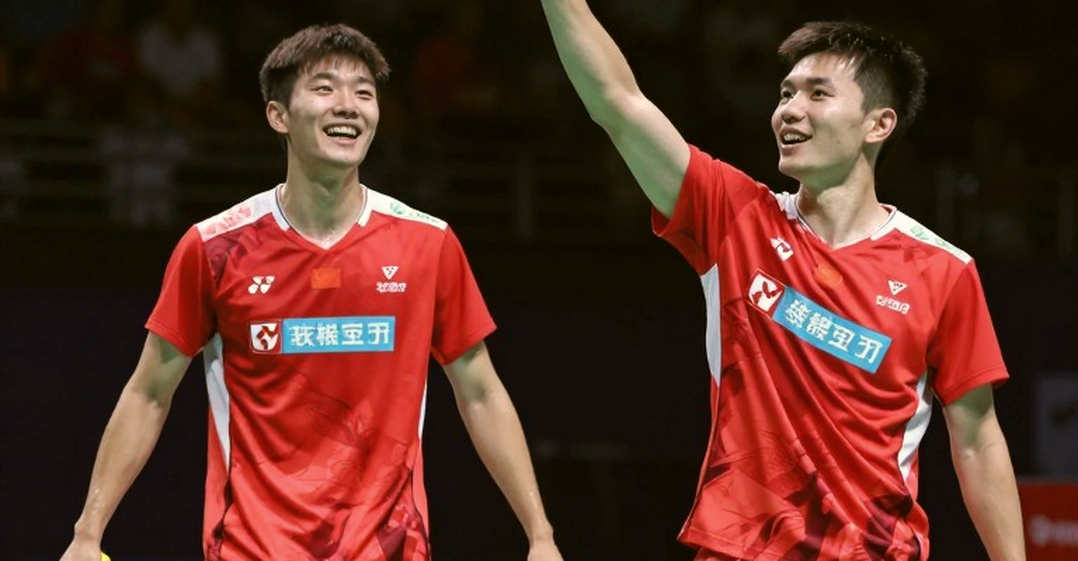
One of the biggest shocks of the badminton competition at the 2026 Asian Games in Aichi-Nagoya, Japan, unfolded on Friday, September 25, 2026. Men's doubles fourth seeds Satwiksairaj Rankireddy and Chirag Shetty of India — the defending champions — were eliminated in their opening match by Thailand's Pakkapan Teeraratsakul and Peeratchai Sukphun, a pair ranked 36th in the world.
The final score was 21-12, 19-21, 14-21. Total match time: 1 hour 8 minutes. It is a result that, judged on seeding alone, is difficult to believe: the fourth seed fell to the world No. 36 in the very round a defending champion would expect to use as a gentle warm-up.
The score arc told the opposite story
Crucially, Satwiksairaj Rankireddy and Chirag Shetty were not outclassed from the outset. The opening game lasted only 20 minutes and closed at 21-12 in their favour. That is the signature dominance of an attacking men's doubles pair operating in the classic front-and-back formation: strong serving and receiving, control of the first three shots, and finishing with downward smashes from the rear court.
The second game reversed everything. At 24 minutes it was the longest block of the match and the only game to reach 40 points. Pakkapan Teeraratsakul and Peeratchai Sukphun won it 21-19 — a two-point margin. That number matters more than it appears: it indicates the Thai pair succeeded in dragging the contest into extended rallies, precisely the terrain that erodes the sharpness of an attacking pair built on explosiveness and net speed.
The decider lasted only 19 minutes and finished 21-14 to the Thai pair. This is the most telling data point of all. The third game produced 35 points in 19 minutes — the fastest points-per-minute rate of the entire match. A physically fading pair normally loses a long, grinding third game. Here the opposite happened: the decider was the shortest block on a per-point basis, and it ended with a seven-point margin. That pattern typically reflects rushed shot selection and forced errors under scoreboard pressure rather than sheer physical exhaustion.
In other words, the score arc — a dominant first game, a narrow second-game loss, then a rapid collapse in the decider — is a textbook front-runner decay curve. Satwiksairaj Rankireddy and Chirag Shetty did not lose because they were overwhelmed from the start. They lost after failing to close a match they had already cracked open.
The problem is closing, not class
It must be stressed that no evidence supports the reading that the Thai pair were simply better. World No. 36 against the fourth seed, and a first-round exit for a defending champion, is by construction an upset rather than a form line.
The most plausible inference is that the Thai pair adjusted their serve-and-receive tactics after the first game and increased flat driving through mid-court. The standard counter to a front-and-back attacking pair is to break up the first three shots and flatten the exchange, denying the rear-court player a high contact point. That is inference, not reportage, because the original report supplies no technical statistics about the match at all.
Age: the least discussed variable
Both Satwiksairaj Rankireddy and Chirag Shetty were born in 2026, making them roughly 29 years old at the 2026 Asian Games. For a men's doubles pair whose identity is built on explosive jump smashing and net-front speed, 29 sits at the front edge of the elite decline window.
The recurring pattern of "win the fast game, lose the long game" is exactly what one expects once the recovery cost of explosive movement rises. This is a structural warning sign, not an incidental accident. The 24-minute second game was the hinge: it drained the pair's reserves, and by the decider their accuracy in shot selection was no longer reliable.
That said, generalising from a single sample demands caution. One match cannot define a partnership's trajectory. The problem is that the original report offers no form curve covering the previous three to six months, so it is impossible to distinguish a bad day from an emerging decline.
A contrasting data point in mixed doubles
In mixed doubles, meanwhile, India produced a sharply contrasting signal. Kapila and Crasto won both games by two-point margins — 22-20 and 24-22. This is the inverse of Satwiksairaj Rankireddy and Chirag Shetty's pattern: a pair that held its nerve in tight finishes.
The contrast strengthens the hypothesis about closing ability and mental resilience. However, Kapila and Crasto must face China's world No. 1 pair in the quarter-finals on Sunday, September 27, 2026 — an extremely steep assignment. Within 48 hours, India's realistic medal expectation in badminton has compressed sharply.
The format amplified the consequences
The result must be placed in its format context. Individual badminton draws at the Asian Games are straight single elimination — no group stage, no second chance. One bad session ends the entire campaign. In a round-robin or team format, this 1 hour 8 minute defeat would have been a recoverable fixture. In knockout play, it is terminal.
In other words, the "shock" quality of the result is partly a format artefact. A defending champion is always one bad session away from elimination.
The ranking-points question
One institutionally important point: badminton results at the Asian Games are widely understood not to carry BWF World Ranking points. It is a continental multi-sport event, not part of the BWF World Tour or the World Championships.
If that holds, this defeat costs almost no ranking points but costs a great deal of prestige. The pair's top-eight seeding position for subsequent 2026-27 BWF events is essentially unaffected. The damage is reputational and psychological, not algorithmic. This amounts to a rule-mediated buffer against a reputational shock. The recommendation is to verify the position against the current BWF ranking regulations.
India's structural fragility in men's doubles
From a landscape perspective, men's doubles is the least hierarchical of badminton's five events. A No. 4 versus No. 36 upset is more plausible here than, for example, in women's singles. The result should be read as evidence of the event's flatness, not necessarily of a collapse by Satwiksairaj Rankireddy and Chirag Shetty.
Even so, the result exposes India's single-point dependency in men's doubles. No other Indian men's doubles pair is identified in the draw, and the concentration of an entire national medal hope in one eliminated pair is a structural fragility signal.
On the Thai side, Pakkapan Teeraratsakul and Peeratchai Sukphun deserve a watch-list flag. A first-round takedown of the defending champions, even as the world No. 36, is exactly the kind of result that precedes a ranking climb. If the pair is young and rising, their ranking may lag their true level, which softens the "shock" framing somewhat.
Risks and what to track
The single largest risk is neither injury nor discipline — it is the front-runner collapse pattern. If it repeats, it will cost titles across formats, because straight knockout is the sport's default. If, over the next five events, Satwiksairaj Rankireddy and Chirag Shetty lose three or more deciders, the competitive risk should be reclassified from medium to high.

The positive note is that, because the Asian Games most likely carry no ranking points, this is paradoxically the ideal moment to diagnose and fix the closing problem before the ranking-critical events of the Los Angeles 2028 cycle.
On the media side, the "shock" label is a framing device rather than a measured assessment. The storyline will be superseded by the mixed doubles quarter-final on September 27, 2026. Meanwhile, the positive signal from Kapila and Crasto is being under-weighted relative to its competitive significance for India's campaign.
Finally, every quantitative claim here should be treated as data pending verification. The original source is a single report by one Indian outlet, with no on-the-record quotations from players, coaches, or federation officials, and some proper nouns show transliteration instability. Cross-checking against official BWF and Asian Games sources is necessary before citing.